The word intestate refers to a person who dies without leaving a valid will that explains how their property and assets should be distributed after death. When someone dies intestate, the law determines who inherits their estate instead of following the person’s written instructions.
Understanding the intestate meaning is important for anyone learning about inheritance, estate planning, family property, or legal terminology. It can also help you understand what happens when a family member passes away without preparing a will.
For example, if a person dies without a valid will and leaves behind a house, savings, and other belongings, they are generally considered to have died intestate. The applicable inheritance laws determine who receives those assets.
In this guide, you will learn the definition of intestate, how intestate succession works, what happens to property, and how the term differs from related legal words.
What Is the Meaning of Intestate?
Intestate means dying without a valid will. It is primarily used in legal matters involving inheritance and the distribution of a deceased person’s estate.
The term can describe a person who dies without ever making a will or someone whose will is legally invalid or does not effectively dispose of all their property.
Here is a simple breakdown:
- Intestate: A person dies without a valid will governing their estate.
- Estate: The money, property, and other assets a person leaves behind.
- Inheritance: Assets or property received from someone who has died.
- Intestate succession: The legal rules that determine who inherits when someone dies intestate.
The exact outcome depends on the laws of the country or state where the relevant estate is administered and, in some cases, the type and location of the property.
Intestate Definition in Simple English
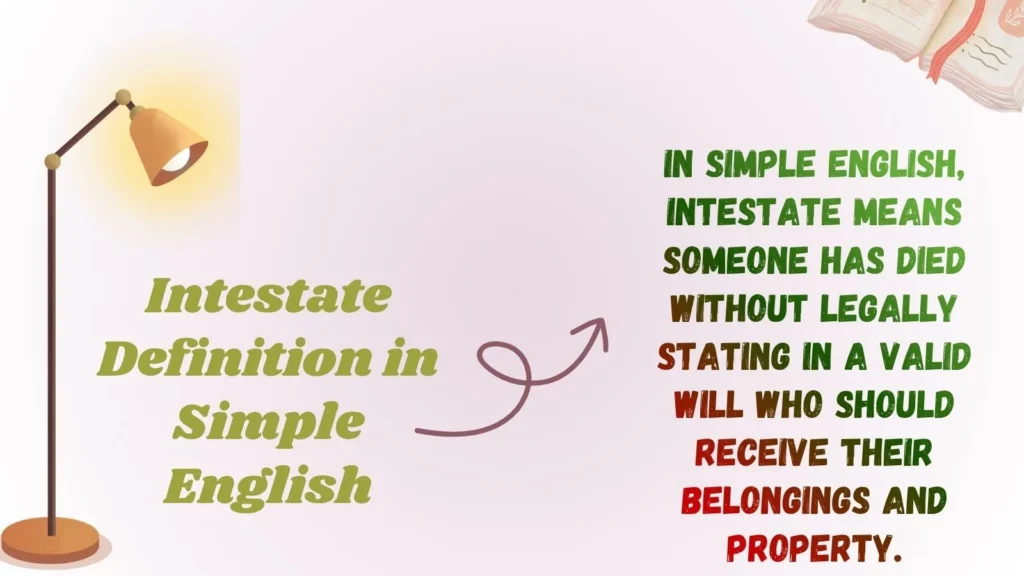
In simple English, intestate means someone has died without legally stating in a valid will who should receive their belongings and property.
Imagine that a person owns a house, a car, and a bank account but never makes a will. After their death, their family cannot simply assume that one particular person automatically receives everything. Instead, the applicable inheritance laws determine the rightful heirs and their shares.
Example sentence: The man died intestate, so the court had to determine how his estate would be distributed under the applicable inheritance laws.
Another example is: Because her father died intestate, the family needed legal guidance to understand who was entitled to inherit his property.
Intestate Meaning in Law
In legal terminology, intestate describes a person who dies without a legally effective will covering the relevant property.
When this happens, the estate is generally distributed according to the applicable rules of intestate succession. These rules may identify eligible relatives, establish the order in which heirs inherit, and determine their respective shares.
Depending on the jurisdiction, the process may involve:
- Identifying the deceased person’s legal heirs.
- Determining which assets belong to the estate.
- Paying valid debts, taxes, and administration expenses.
- Appointing an administrator to handle the estate.
- Distributing the remaining assets according to the law.
It is important to understand that dying intestate does not necessarily mean that the government takes the person’s property. In many cases, eligible family members inherit under statutory rules. What happens when there are no eligible heirs depends on local law.
What Is Intestate Succession?
Intestate succession is the legal process used to distribute a deceased person’s estate when they die without a valid will covering that property.
The law establishes who may inherit and how the estate should be divided. The rules vary considerably between jurisdictions.
For example, a particular legal system might give priority to a surviving spouse and children. Another system may apply different rules based on the deceased person’s family relationships, personal law, or the type of property involved.
Intestate succession generally addresses three important questions:
- Who is legally entitled to inherit?
- What portion of the estate does each eligible heir receive?
- Who has the authority to manage and distribute the estate?
The answers depend on the applicable law rather than on assumptions about what the deceased person would have wanted.
What Happens When Someone Dies Intestate?
When someone dies intestate, their estate typically goes through a legal administration process. The exact steps vary, but the following outline explains how the process commonly works.
1. The Estate Is Identified
The first step is to identify the deceased person’s assets and liabilities. These may include real estate, bank accounts, investments, vehicles, personal belongings, and outstanding debts.
Not every asset necessarily passes through intestate succession. Certain jointly owned assets, insurance benefits, or accounts with designated beneficiaries may be governed by separate rules.
2. An Administrator May Be Appointed
If someone needs legal authority to manage the estate, an administrator may be appointed under the applicable law.
The administrator performs duties similar to those of an executor named in a will. These duties may include collecting assets, paying eligible debts, completing required paperwork, and distributing the remaining estate.
The appointment process differs by jurisdiction.
3. Debts and Expenses Are Addressed
Before beneficiaries receive their shares, valid debts and estate administration expenses may need to be paid.
Depending on local law, taxes and other obligations may also need to be addressed. The amount available for inheritance therefore may be less than the total value of the deceased person’s assets.
4. Legal Heirs Are Identified
The administrator determines which relatives or other individuals qualify as heirs under the relevant inheritance rules.
The outcome may depend on whether the deceased left a spouse, children, parents, siblings, or other relatives.
5. The Remaining Estate Is Distributed
After the estate’s obligations have been addressed, the remaining assets are distributed according to the applicable succession rules.
Family members should not assume that property automatically belongs to the person who manages the funeral, lives in the family home, or handles the deceased person’s finances.
Intestate Example in Real Life
Consider this hypothetical example.
Ahmed owns a house, has savings in a bank account, and owns a vehicle. He dies without making a valid will. He is survived by his spouse and two children.
Because Ahmed died intestate, the law governing his estate determines who inherits his property and how the estate is divided. His family cannot automatically choose their own inheritance percentages unless the applicable law permits a valid arrangement.
The administrator may need to identify the assets, address debts and expenses, establish the legal heirs, and complete the distribution process.
This example illustrates the basic meaning of intestate. It does not establish a universal inheritance formula because the actual shares depend on the applicable law and the family’s circumstances.
What Is an Intestate Estate?
An intestate estate is an estate, or the relevant portion of an estate, that is distributed under intestacy rules because it is not effectively covered by a valid will.
It may include assets such as:
- Houses and land.
- Money held in bank accounts.
- Vehicles and personal belongings.
- Investments and certain financial interests.
- Other property legally belonging to the deceased.
The exact assets included in the estate depend on ownership arrangements and local law. For example, an asset that passes directly to a surviving joint owner or a named beneficiary may not be distributed in the same way as other estate assets.
The estate may also have liabilities, such as outstanding loans or other valid debts, which can affect the amount ultimately available to heirs.
Who Inherits When Someone Dies Intestate?
There is no single inheritance rule that applies worldwide. The eligible heirs and their shares depend on the jurisdiction and the deceased person’s circumstances.
Commonly relevant family relationships include:
Surviving Spouse
A surviving spouse may be entitled to part or all of an intestate estate, depending on the applicable law and whether other relatives survive the deceased.
Children
Children are often among the primary heirs. However, the way their shares are calculated can differ based on the legal system and family circumstances.
Parents
If a person dies without a spouse or children, their parents may qualify as heirs under the applicable rules.
Siblings and Other Relatives
If closer relatives are not eligible or do not survive the deceased, siblings or more distant relatives may inherit, depending on the law.
The Government
If no legally eligible heirs can be identified, some jurisdictions allow the estate to pass to the state or government. This is not the default outcome in every intestate case.
Important: Never assume that a spouse, child, sibling, or other relative automatically receives a particular percentage of an intestate estate. The legal rules must be checked for the relevant jurisdiction.
Intestate vs. Testate: What Is the Difference?
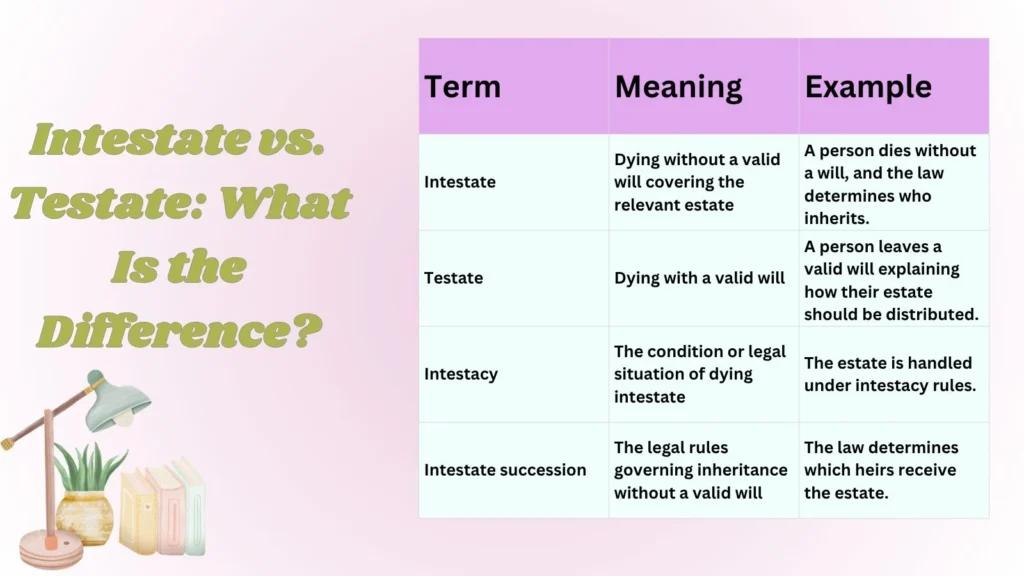
The terms intestate and testate describe two different situations involving a person’s death and will.
| Term | Meaning | Example |
|---|---|---|
| Intestate | Dying without a valid will covering the relevant estate | A person dies without a will, and the law determines who inherits. |
| Testate | Dying with a valid will | A person leaves a valid will explaining how their estate should be distributed. |
| Intestacy | The condition or legal situation of dying intestate | The estate is handled under intestacy rules. |
| Intestate succession | The legal rules governing inheritance without a valid will | The law determines which heirs receive the estate. |
The main difference is that a valid will can provide instructions for distributing property, subject to applicable legal restrictions. When no valid will governs the estate, intestate succession rules generally apply.
A person who leaves a will may still die intestate with respect to property that the will does not effectively cover. This is sometimes called partial intestacy.
Intestate Meaning in Pakistan
In Pakistan, intestate inheritance generally concerns property left by a person who dies without a valid will governing its distribution. The applicable rules depend on the person’s circumstances, the nature of the property, and the relevant legal framework.
For many Muslims in Pakistan, inheritance is governed substantially by Islamic succession principles as applied through Pakistani law. The distribution can involve a surviving spouse, children, parents, and other eligible relatives, with shares determined by the relevant rules.
For non-Muslims, different personal laws and legal provisions may apply. The treatment of wills, property, and succession can also depend on the circumstances of the estate.
For example, if a person in Pakistan dies without a valid will, the family may need to establish the legal heirs and complete the appropriate succession or property-transfer procedures before assets can be transferred.
Inheritance matters can become complicated when there are disputes, multiple properties, outstanding debts, or disagreements about legal heirs. A qualified Pakistani lawyer can explain which rules apply to a particular estate.
This section is general information, not individualized legal advice. The correct inheritance shares and procedures should be confirmed under the law applicable to the deceased person.
Intestate Meaning in the United States
In the United States, intestate succession laws are primarily determined by state law. The rules can differ from one state to another.
In many states, a surviving spouse and children may inherit some or all of the estate. In other circumstances, parents, siblings, or more distant relatives may qualify.
The result can depend on factors such as whether the deceased was married, whether the children were also children of the surviving spouse, and whether certain assets pass outside probate.
For example, a person who dies intestate in one state may leave a different inheritance outcome than someone with the same family structure who dies in another state.
Anyone dealing with an intestate estate in the United States should consult the law of the relevant state or seek advice from an estate attorney.
Is Intestate the Same as Having No Family?
No. Intestate does not mean that a person has no family. It means that the person died without a valid will covering the relevant property.
Someone may die intestate while leaving a spouse, children, parents, siblings, or many other relatives. The applicable law determines which of those relatives qualify as heirs.
Similarly, a person who has no close relatives may still die intestate. In that situation, the law determines whether more distant relatives or, in certain circumstances, the government can inherit.
The word describes the legal status of the estate, not the size of the deceased person’s family.
Is Intestate the Same as Having No Property?
No. A person can die intestate while owning substantial assets or very little property.
The term concerns whether a valid will governs the estate, not how wealthy the deceased person was.
For example, someone who owns several houses and bank accounts but leaves no valid will may die intestate. Someone who owns only a small amount of property can also die intestate.
The legal administration process may be more complicated when the estate includes numerous assets, disputed ownership, or significant debts.
Can You Die Partially Intestate?
Yes. In some legal systems, a person can die partially intestate.
Partial intestacy occurs when a valid will exists but does not effectively dispose of the entire estate. For instance, a will may specify who receives a house but fail to address certain other assets.
The property not effectively covered by the will may be distributed under the applicable intestacy rules, while the property covered by the will is handled according to its valid provisions.
Whether partial intestacy occurs, and how it is handled, depends on local law and the wording and validity of the will.
Why Is Understanding Intestate Important?
Understanding the meaning of intestate is useful for several reasons.
It explains inheritance rights. The term helps families understand why the law may determine who inherits a deceased person’s property.
It highlights the importance of estate planning. Making a valid will can help a person communicate their wishes, subject to legal restrictions.
It clarifies legal paperwork. People handling probate, estate administration, or succession documents may encounter the word intestate.
It helps prevent misunderstandings. Family members may have different expectations about inheritance. Knowing the legal meaning of intestate helps distinguish personal assumptions from legally recognized rights.
It encourages timely legal advice. When a family member dies without a will, understanding the applicable law can help relatives identify the correct procedures and avoid unnecessary disputes.
Common Mistakes About the Word Intestate

Mistake 1: Thinking Intestate Means Dying Without Any Money
This is incorrect. Intestate refers to the absence of a valid will covering the relevant estate, regardless of the person’s wealth.
Mistake 2: Assuming the Spouse Inherits Everything
A surviving spouse’s inheritance depends on the applicable law and the deceased person’s family circumstances. The spouse does not necessarily inherit the entire estate.
Mistake 3: Believing the Government Automatically Takes the Estate
In many cases, eligible relatives inherit under intestacy laws. Government inheritance may arise in certain circumstances, such as when no eligible heirs exist, depending on local law.
Mistake 4: Confusing Intestate With Testate
Intestate generally refers to dying without a valid will governing the relevant property. Testate refers to dying with a valid will.
Mistake 5: Assuming Every Asset Is Distributed Through Intestacy
Some assets may pass directly to joint owners or designated beneficiaries under separate legal arrangements. The estate’s composition must be examined carefully.
FAQs:
What does intestate mean in simple terms?
Intestate means a person has died without a valid will covering the relevant property. The applicable inheritance laws determine how that property is distributed.
What is the legal definition of intestate?
Legally, intestate describes a person who dies without a legally effective will governing the relevant estate or property. It is associated with intestate succession and estate administration.
What does dying intestate mean?
Dying intestate means passing away without leaving a valid will that effectively determines the distribution of the relevant estate.
What is intestate succession?
Intestate succession is the legal process or set of rules used to determine who inherits property when a person dies without a valid will covering that property.
What is an intestate estate?
An intestate estate is the property, or portion of the property, that is distributed under intestacy rules.
What is the opposite of intestate?
The related opposite term is testate, which generally describes a person who dies leaving a valid will.
Does intestate mean someone died unexpectedly?
No. Intestate does not describe whether a death was expected or unexpected. It describes the legal situation concerning the person’s will.
Can a person die intestate even if they made a will?
Yes, in certain circumstances. A purported will may be invalid, or a valid will may fail to cover some or all of the property. Whether intestacy applies depends on the relevant law.
Who manages an intestate estate?
An administrator or another legally authorized person may manage the estate. The appointment process and responsibilities depend on the applicable jurisdiction.
Does intestate mean all property goes to the children?
No. The children may be eligible heirs, but a surviving spouse, parents, or other relatives may also have inheritance rights under the relevant law.
Is intestate a legal term?
Yes. Intestate is a legal term most commonly used in inheritance, wills, probate, and estate administration.
How do you use intestate in a sentence?
You can say, “Because the owner died intestate, the estate was distributed according to the applicable inheritance laws.”
Conclusion:
The intestate meaning is straightforward: it describes a person who dies without a valid will covering the relevant property. When this happens, the applicable intestacy laws determine who inherits the estate and how the remaining assets are distributed.
The legal process may involve identifying assets, addressing debts, appointing an administrator, and determining the eligible heirs. The exact inheritance rules vary by jurisdiction, so families should seek qualified legal advice when handling an actual estate.
Understanding this term makes it easier to read legal documents, learn about inheritance rights, and recognize why preparing a valid will can be an important part of estate planning.

I am Henry James and i am a passionate writer and language enthusiast behind PunPalace, a platform dedicated to exploring meanings, word origins, and simple explanations. My aims to make learning vocabulary easy, engaging, and accessible for everyone.