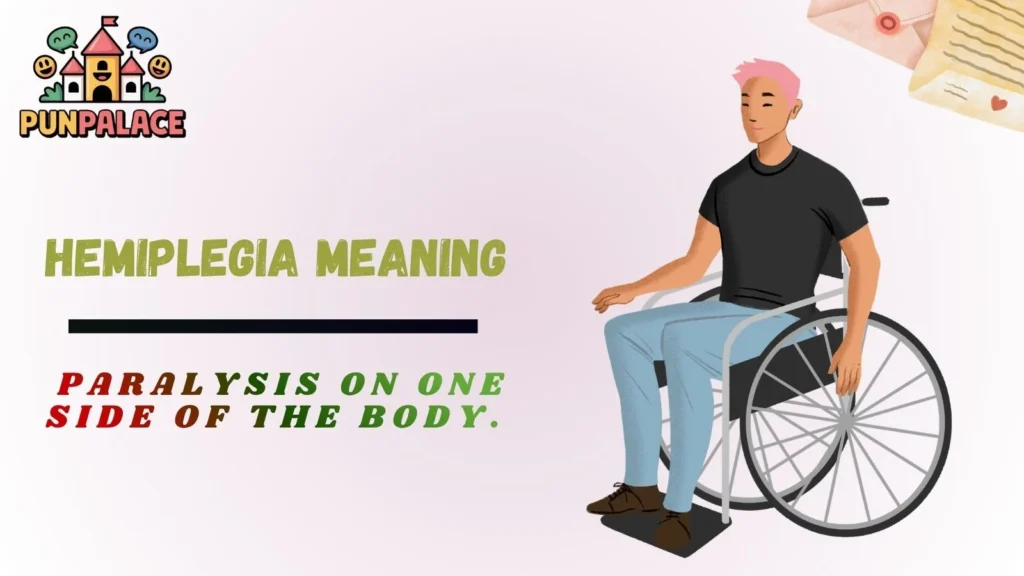
Hemiplegia means paralysis affecting one side of the body. It may affect the arm, leg, face, or a combination of these areas on either the left or right side.
In simple English, hemiplegia means that a person has little or no voluntary movement on one side of the body because of a problem affecting the nervous system. It is generally a symptom of an underlying neurological condition, rather than a disease by itself.
Hemiplegia can have many possible causes. One of the most important is stroke, but other causes include brain injuries, spinal cord problems, seizures, infections, tumors, certain neurological diseases, and some conditions that begin during childhood.
Because sudden hemiplegia can be a sign of stroke, new or unexplained one-sided paralysis requires urgent medical attention.
Hemiplegia Meaning in Simple English

The easiest way to understand the word is:
Hemiplegia means paralysis on one side of the body.
For example, if a person suddenly cannot move their right arm and right leg normally, they may have right-sided hemiplegia. If the left side is affected, it may be described as left-sided hemiplegia.
The condition can also involve one side of the face. The exact pattern depends on where the underlying problem occurs in the nervous system.
Hemiplegia may be temporary in some situations or may persist for a long time depending on its cause and the extent of nervous-system damage.
Hemiplegia at a Glance
| Term | Meaning |
|---|---|
| Hemiplegia | Paralysis affecting one side of the body |
| Right hemiplegia | Paralysis affecting the right side |
| Left hemiplegia | Paralysis affecting the left side |
| Hemiparesis | Weakness affecting one side rather than complete paralysis |
| Paraplegia | Paralysis mainly affecting both legs and sometimes the lower body |
| Quadriplegia | Paralysis involving all four limbs and potentially the torso |
What Causes Hemiplegia?
Hemiplegia happens when something interferes with the nervous system pathways responsible for controlling movement. The brain, spinal cord, and nerves work together to send movement signals to muscles. Damage or disruption along these pathways can result in paralysis.
There are many possible causes, including:
- Stroke
- Transient ischemic attack or TIA in certain circumstances
- Traumatic brain injury
- Spinal cord injury
- Brain hemorrhage
- Brain tumors
- Seizures or epilepsy
- Multiple sclerosis and other neurological disorders
- Infections affecting the nervous system
- Certain childhood neurological conditions
- Hemiplegic migraine
- Other conditions affecting the brain or nervous system
Stroke is particularly important because it can cause sudden weakness or paralysis on one side of the body and requires emergency medical evaluation.
Hemiplegia and Stroke
When people search for the hemiplegia meaning, they often encounter the condition in discussions about stroke.
A stroke occurs when blood flow to part of the brain is interrupted or when bleeding occurs in the brain. Depending on which part of the brain is affected, a person may suddenly develop weakness or paralysis on the opposite side of the body.
For example, an injury affecting movement-related areas of the left side of the brain can produce symptoms on the right side of the body. This happens because many motor pathways cross from one side to the other within the nervous system.
Stroke symptoms can also include speech difficulties, facial drooping, confusion, vision problems, and problems with balance or coordination.
If one-sided paralysis or weakness appears suddenly, do not wait to see whether it goes away. Stroke is a medical emergency, and rapid evaluation can be important.
What Are the Symptoms of Hemiplegia?
The main symptom of hemiplegia is loss of voluntary movement on one side of the body. The severity and exact symptoms can vary depending on the underlying cause.
Possible symptoms include:
- Inability to move one arm normally
- Inability to move one leg normally
- Weak or paralyzed facial muscles on one side
- Difficulty walking
- Problems with balance
- Muscle stiffness or abnormal muscle contractions
- Changes in coordination
- Numbness or altered sensation in some cases
- Difficulty performing everyday activities
Not everyone experiences all of these symptoms. Some people have much greater impairment in the arm than the leg, while others have significant facial involvement as well.
The underlying condition can also cause additional symptoms. For example, a stroke may cause speech or vision problems in addition to hemiplegia.
Right-Sided vs Left-Sided Hemiplegia
Right hemiplegia means paralysis affecting the right side of the body, while left hemiplegia means paralysis affecting the left side.
The side affected can provide doctors with useful information about where a neurological problem may have occurred. Problems in one side of the brain can often affect movement on the opposite side of the body because major motor pathways cross within the nervous system.
However, the side of paralysis alone cannot identify the exact cause. A healthcare professional needs to consider the person’s symptoms, medical history, physical examination, and appropriate diagnostic tests.
Hemiplegia vs Hemiparesis
One of the most common sources of confusion is the difference between hemiplegia and hemiparesis.
Hemiplegia generally refers to paralysis affecting one side of the body, while hemiparesis refers to weakness affecting one side.
| Condition | Basic Meaning |
|---|---|
| Hemiplegia | One-sided paralysis |
| Hemiparesis | One-sided weakness |
The terms can sometimes be used differently in clinical settings, and people may use them interchangeably in casual conversation. However, the usual distinction is that hemiplegia describes more severe loss of movement, whereas hemiparesis describes reduced strength.
Hemiplegia in Children
Hemiplegia can also occur in children. Some children develop one-sided movement problems because of conditions or injuries affecting the developing brain.
For example, certain forms of cerebral palsy can affect movement predominantly on one side of the body. Brain injuries occurring around birth or during early childhood can also result in long-term movement difficulties.
Children with one-sided motor impairment may have difficulty using one hand, walking, maintaining balance, or performing activities that require coordinated movement.
Early evaluation and appropriate rehabilitation can help children develop functional skills and adapt to movement challenges.
Can Hemiplegia Be Temporary?
Whether hemiplegia is temporary or long-lasting depends heavily on its underlying cause.
Some neurological conditions can produce temporary episodes of paralysis. For example, hemiplegic migraine can cause temporary weakness or paralysis-like symptoms as part of a migraine episode.
Other causes may produce persistent paralysis because they have caused lasting damage to the brain, spinal cord, or other parts of the nervous system.
Therefore, it is not possible to determine whether hemiplegia will be temporary simply from the symptom itself. A healthcare professional needs to identify the cause.
How Is Hemiplegia Diagnosed?
Hemiplegia is a clinical symptom, so doctors generally begin by examining movement, strength, reflexes, sensation, coordination, and other neurological functions.
The diagnostic process depends on the suspected cause. A healthcare professional may consider:
- The exact time symptoms began
- Whether the symptoms appeared suddenly or gradually
- Which parts of the body are affected
- Recent injuries or illnesses
- Other neurological symptoms
- Previous medical conditions
Depending on the situation, imaging tests such as CT scans or MRI scans may be used to look for stroke, bleeding, brain injury, tumors, or other abnormalities. Other tests may be appropriate depending on the suspected cause.
How Is Hemiplegia Treated?
There is no single treatment for hemiplegia because it is a symptom with many possible causes. Treatment focuses primarily on the underlying condition.
For example, someone experiencing hemiplegia because of a stroke needs urgent stroke evaluation and treatment. Someone with long-term paralysis after a neurological injury may need an individualized rehabilitation program.
Rehabilitation can include:
- Physical therapy to work on mobility, balance, strength, and movement.
- Occupational therapy to improve the ability to perform everyday activities.
- Speech therapy when communication or swallowing problems are present.
- Assistive equipment to improve mobility and independence.
- Management of complications such as muscle stiffness or spasticity.
Rehabilitation plans are individualized because the cause, severity, affected body parts, and recovery potential vary from person to person.
Can People Recover From Hemiplegia?
Recovery depends on the underlying cause, the extent of neurological injury, the person’s overall situation, and the response to treatment and rehabilitation.
Some people regain significant movement, while others continue to have long-term impairment. Improvement can occur gradually, and rehabilitation may help people develop safer and more effective ways to move and perform daily activities.
It is important not to assume that a particular person’s recovery will follow someone else’s experience. A healthcare professional can provide more meaningful information after determining the cause of the hemiplegia.
Hemiplegia vs Other Types of Paralysis
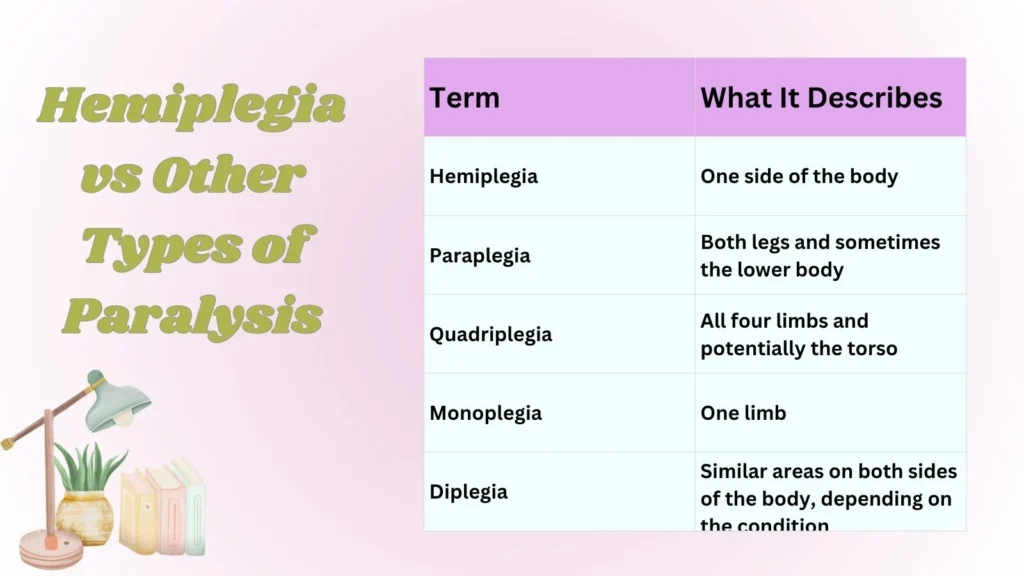
The word hemiplegia specifically describes paralysis affecting one side of the body. Other terms describe different patterns of paralysis.
| Term | What It Describes |
|---|---|
| Hemiplegia | One side of the body |
| Paraplegia | Both legs and sometimes the lower body |
| Quadriplegia | All four limbs and potentially the torso |
| Monoplegia | One limb |
| Diplegia | Similar areas on both sides of the body, depending on the condition |
These terms describe patterns of paralysis rather than necessarily identifying the disease that caused them.
Hemiplegia in Everyday Language
Medical professionals may use the term hemiplegia because it gives a precise description of a person’s neurological symptom.
In everyday conversation, however, people may simply say:
- “Paralysis on one side of the body.”
- “One-sided paralysis.”
- “They cannot move one side of their body.”
- “They have paralysis affecting the right side.”
All of these phrases can help explain the basic idea to someone who is unfamiliar with medical terminology.
Example Sentences With Hemiplegia
Here are several examples showing how the word can be used naturally:
- “The patient developed hemiplegia after the stroke.”
- “The doctor explained that the condition was causing right-sided hemiplegia.”
- “Physical therapy was recommended to help manage the effects of hemiplegia.”
- “The child has movement difficulties associated with hemiplegia.”
- “Sudden hemiplegia should be evaluated urgently because it can be associated with stroke.”
Is Hemiplegia the Same as a Stroke?
No. Hemiplegia and stroke are not the same thing.
A stroke is a medical event involving disrupted blood flow to the brain or bleeding in the brain. Hemiplegia is a symptom that can result from a stroke.
In other words, stroke can be a cause, while hemiplegia can be one of the resulting symptoms.
Hemiplegia can also have causes other than stroke, including brain injuries, spinal cord injuries, neurological diseases, seizures, infections, and other conditions.
When Is Hemiplegia an Emergency?
Sudden, unexplained hemiplegia should be treated as an emergency.
If someone suddenly develops weakness or paralysis on one side of the body, especially along with facial drooping, speech difficulties, confusion, vision changes, severe balance problems, or other sudden neurological symptoms, seek emergency medical care immediately.
Stroke symptoms often begin suddenly, and one-sided weakness or numbness is a major warning sign.
A useful way to remember common stroke warning signs is FAST:
- F — Face: Is one side of the face drooping?
- A — Arms: Is one arm weak or unable to stay raised?
- S — Speech: Is speech slurred, confused, or difficult to understand?
- T — Time: Get emergency medical help immediately.
Do not try to diagnose sudden paralysis at home. Rapid medical assessment is important because some causes of sudden hemiplegia require immediate treatment.
Common Mistakes About Hemiplegia
Mistake 1: Thinking Hemiplegia Is Always a Disease
Hemiplegia is generally a symptom or neurological condition describing paralysis, not one single disease with one universal cause.
Mistake 2: Confusing Hemiplegia With Hemiparesis
Hemiplegia generally means paralysis, while hemiparesis means weakness. Although the terms may sometimes be used interchangeably, they describe different degrees of movement impairment.
Mistake 3: Assuming Hemiplegia Always Means Stroke
Stroke is an important cause, but hemiplegia can result from several other neurological conditions and injuries.
Mistake 4: Ignoring Sudden One-Sided Paralysis
This is one of the most serious mistakes. Sudden unexplained one-sided weakness or paralysis can be a sign of stroke and should receive urgent medical attention.
Mistake 5: Assuming Everyone Recovers in the Same Way
Recovery varies because the underlying causes and extent of neurological damage differ from person to person.
FAQs:
What does hemiplegia mean in simple words?
Hemiplegia means paralysis affecting one side of the body. It may affect one arm, one leg, the face, or several areas on the same side.
What is the difference between hemiplegia and hemiparesis?
Hemiplegia generally refers to paralysis on one side of the body, while hemiparesis refers to weakness on one side. Hemiplegia is usually considered the more severe loss of movement.
Can hemiplegia be caused by a stroke?
Yes. Stroke is one of the most important causes of hemiplegia. However, other brain, spinal cord, and neurological conditions can also cause it.
Can hemiplegia be cured?
There is no single answer because treatment and recovery depend on the underlying cause. Some causes are treatable or reversible, while other forms of neurological damage can cause lasting impairment. Rehabilitation may help improve function and independence.
Is sudden hemiplegia an emergency?
Yes. If paralysis or significant weakness develops suddenly without a known explanation, especially with other stroke symptoms, seek emergency medical care immediately.
Final Thoughts:
The hemiplegia meaning is relatively straightforward: it describes paralysis affecting one side of the body. However, the reasons behind it can be complex.
Hemiplegia can occur because of stroke, brain or spinal cord injury, neurological disease, seizures, infections, migraines, and other conditions. Its effects can involve the face, arm, leg, or several areas on one side of the body.
The most important point is that sudden unexplained one-sided paralysis should never be ignored. It can be a warning sign of stroke, and urgent medical evaluation is essential.

I am Henry James and i am a passionate writer and language enthusiast behind PunPalace, a platform dedicated to exploring meanings, word origins, and simple explanations. My aims to make learning vocabulary easy, engaging, and accessible for everyone.