Have you ever seen colorful flags hanging across a room at a birthday party, wedding, festival, or outdoor celebration? Those decorative strings of flags are often called bunting. The word has several meanings, however, and its definition can change depending on the context.
The most common meaning of bunting is a decorative arrangement of small flags, fabric triangles, or colorful pieces of material hung on a string. People use bunting to decorate homes, schools, shops, gardens, and event spaces.
For example, if someone says, “We decorated the garden with bunting for the birthday party,” they mean that colorful decorations were hung around the garden to make it look festive.
Bunting can also refer to a lightweight fabric traditionally used for making flags. In sports, especially baseball and cricket, the word has a different meaning connected with how a player handles or directs the ball.
Understanding the bunting meaning is useful because the word appears in everyday conversations, decorating ideas, sports commentary, and descriptions of celebrations.
In this guide, you will learn the definition of bunting, its different meanings, common types, examples, synonyms, and how to use it correctly in a sentence.
What Is the Meaning of Bunting in Simple English?
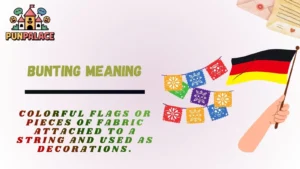
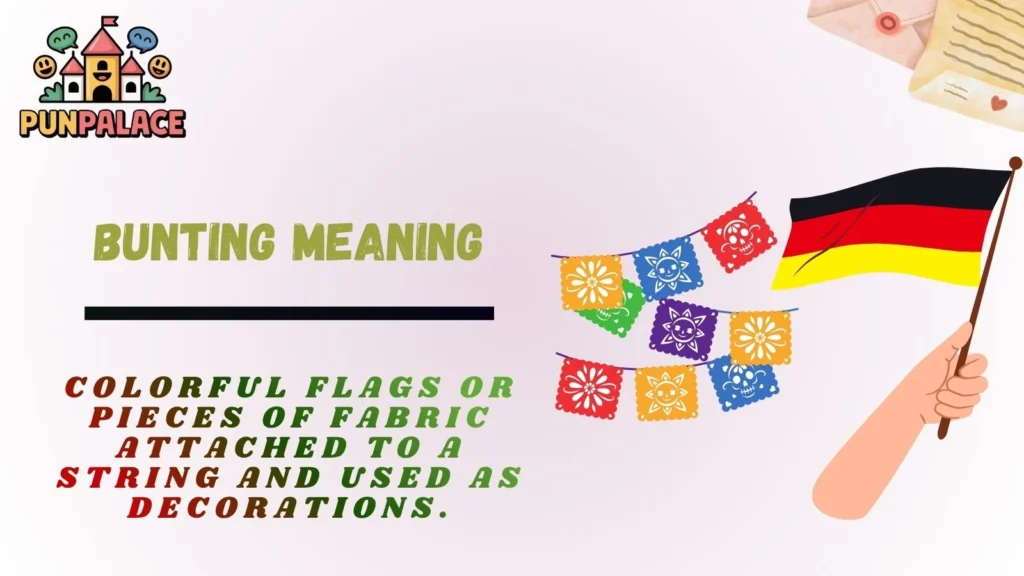
In simple English, bunting usually means colorful flags or pieces of fabric attached to a string and used as decorations.
These decorations are commonly displayed during special occasions to create a cheerful and welcoming atmosphere.
Bunting may be made from paper, cotton, felt, plastic, or other lightweight materials. The pieces are often shaped like triangles, rectangles, or small flags.
For example:
- Colorful triangular flags hanging at a birthday party are bunting.
- Decorative flags displayed outside a school for a celebration can be called bunting.
- Red, white, and blue flags arranged along a street may be described as patriotic bunting.
The word is especially common in British English, where people frequently use it when talking about party decorations and public celebrations.
However, bunting does not always refer to decorations. In certain contexts, it has specific meanings in sports and textiles.
Bunting Definition and Dictionary Meaning

The word bunting is a noun in its decorative and fabric-related uses. Its meaning depends on how it appears in a sentence.
The main definitions include:
- Decorative flags: Small flags or pieces of fabric attached to a line for decoration.
- Flag-making fabric: A lightweight material traditionally used to make flags and similar decorations.
- A baseball technique: A batting action in which the batter lightly directs the ball rather than making a full swing.
- A cricket technique: A controlled shot or gentle contact with the ball, although cricket terminology more commonly uses terms such as a defensive push, dab, or gentle tap rather than bunting.
- A bird name: Bunting can also refer to a group of small seed-eating birds belonging to the bunting family, commonly associated with the genus Emberiza and related groups.
The decorative meaning is the one most people encounter when discussing parties, holidays, and events.
What Does Bunting Mean in Decorations?
In decorating, bunting refers to a string or arrangement of decorative flags, fabric pieces, or paper shapes.
It is popular because it is lightweight, easy to hang, and available in many colors and designs. Bunting can make a plain space look more festive without requiring complicated decorations.
Common Uses of Decorative Bunting
- Birthday parties: Colorful flags are hung over tables, walls, or doorways.
- Weddings: Fabric bunting creates a romantic or rustic atmosphere.
- Festivals: Streets and public spaces are decorated with strings of flags.
- National celebrations: Flags in national colors are displayed during patriotic events.
- Baby showers: Pastel-colored bunting adds a soft decorative touch.
- School events: Classrooms and halls are decorated for special occasions.
- Garden parties: Outdoor bunting is hung between trees, fences, or poles.
For example, consider this sentence:
“We hung pink and white bunting across the room before the baby shower.”
This means that decorative flags or fabric pieces were attached to a string and displayed across the room.
What Does Bunting Look Like?
Bunting comes in many shapes, sizes, materials, and color combinations. Its appearance usually depends on the occasion and the style of decoration.
Here are some common types.
| Type of Bunting | Appearance | Common Use |
|---|---|---|
| Triangle bunting | Small triangular flags attached to a string | Birthdays and garden parties |
| Fabric bunting | Flags made from cotton, felt, or other fabrics | Weddings and reusable decorations |
| Paper bunting | Lightweight paper flags or shapes | Children’s parties and school events |
| Patriotic bunting | Flags or fabric in national colors | National holidays and public events |
| Personalized bunting | Flags displaying names, letters, or messages | Birthdays and special celebrations |
| Seasonal bunting | Designs related to a holiday or season | Christmas, Halloween, and other celebrations |
Bunting may be plain, patterned, printed, or decorated with letters and pictures.
Some designs feature simple geometric shapes, while others include flowers, stars, hearts, or seasonal illustrations.
What Is the Origin of the Word Bunting?
The word bunting has historical connections with textiles and flags. The term has long been associated with lightweight cloth used for making flags and decorative displays.
The precise historical development of the word is not entirely straightforward, but its traditional association with flag-making helps explain its modern decorative meaning.
Over time, bunting became strongly associated with celebrations, public ceremonies, and patriotic displays. Strings of small flags offered a convenient way to decorate large spaces, streets, and buildings.
Today, the word is widely used for decorative flag garlands, even when the pieces are made from paper, felt, or synthetic materials rather than traditional flag fabric.
What Is the Difference Between Bunting and Flags?
Bunting and flags are related, but they are not exactly the same.
A flag is generally a single piece of material displaying a symbol, design, or national identity. Bunting often refers to multiple small flags or decorative pieces arranged along a line.
For example, a country’s national flag may be displayed on a pole, while patriotic bunting may consist of many small flags hung across a street.
| Feature | Bunting | Flag |
|---|---|---|
| Typical appearance | A string of multiple decorative pieces | Usually one individual piece |
| Main purpose | Decoration or celebration | Identification, symbolism, communication, or decoration |
| Common arrangement | Hung along a line, wall, or space | Often mounted on a pole or displayed separately |
| Materials | Paper, fabric, plastic, or other lightweight materials | Commonly fabric or another suitable material |
| Example | Colorful triangular flags at a party | A national flag outside a building |
The distinction is not absolute because bunting can itself be made from small flags.
What Does Bunting Mean in Baseball?
In baseball, bunting is a batting technique in which a batter holds the bat relatively still and gently redirects the pitched ball into the field instead of taking a full swing.
The technique can help the offensive team advance a runner or attempt to reach base, depending on the situation.
A bunt usually involves making controlled contact with the ball so that it travels a short distance into the playing field.
Why Do Baseball Players Use Bunting?
Players may use bunting for several reasons:
- Advancing a runner: A sacrifice bunt may help move a runner into scoring position.
- Reaching base: A batter may attempt a bunt that forces the defense to make a difficult play.
- Creating defensive pressure: A well-placed bunt can require quick decisions from fielders.
- Changing the pace of play: A bunt can surprise a defense expecting a conventional swing.
For example:
“The batter used a bunt to move the runner from first base to second.”
This means the batter gently directed the ball into the field to help advance the runner.
Baseball rules and strategy can affect when bunting is appropriate, and the outcome is not guaranteed.
What Does Bunting Mean in Cricket?
The word bunting is not a standard, widely used technical term in cricket in the same way it is in baseball.
In an informal description, someone might use it to refer to a batter gently tapping or guiding the ball. However, cricket commentary generally uses more established expressions, such as a defensive shot, a push, a dab, or a gentle tap.
For example:
“The batter gently pushed the ball into the gap and took a single.”
This describes controlled contact with the ball, but it would not usually be called bunting in standard cricket terminology.
If you encounter the word in a cricket discussion, the surrounding context is important because the speaker may be using it informally.
What Does Bunting Mean as a Bird?
Bunting is also the name used for certain small birds. Many buntings are seed-eating birds associated with the family Emberizidae or related groups, depending on the classification system.
These birds are often found in grasslands, farmland, open countryside, and other habitats where seeds and small insects are available.
Examples include the yellowhammer, reed bunting, and snow bunting.
The word has nothing to do with party decorations when it is used in this context.
For example:
“A reed bunting was spotted near the wetland.”
Here, bunting refers to a bird rather than a string of decorative flags.
What Are the Different Types of Bunting?
Decorative bunting is available in different styles to suit different occasions, spaces, and budgets.
1. Triangle Bunting
Triangle bunting consists of triangular pieces attached along a cord. It is one of the most recognizable styles.
It is commonly used for birthdays, garden parties, school celebrations, and casual gatherings.
2. Fabric Bunting
Fabric bunting is made from materials such as cotton, felt, or linen. It can be reused for multiple occasions and often suits rustic or handmade decorating styles.
For example, floral fabric bunting may be used at a garden wedding.
3. Paper Bunting
Paper bunting is lightweight and often inexpensive. It is a popular option for one-time events and children’s parties.
It can feature bright colors, printed patterns, letters, or themed designs.
4. Personalized Bunting
Personalized bunting displays a name, message, age, or other custom detail.
For example, a birthday banner might spell out “Happy Birthday” across several flags.
5. Patriotic Bunting
Patriotic bunting uses national colors, symbols, or miniature flags. It is often displayed during national holidays, sporting events, and public celebrations.
6. Seasonal Bunting
Seasonal bunting is designed for a specific time of year or holiday.
Examples include snowflake bunting for winter, pumpkin bunting for Halloween, and floral bunting for spring.
7. Outdoor Bunting
Outdoor bunting is designed for use in gardens, courtyards, streets, or event venues.
Its durability depends on the materials and construction. Wind, rain, and sunlight can damage some types, so weather-resistant materials may be more suitable for long outdoor displays.
Bunting Synonyms and Related Words
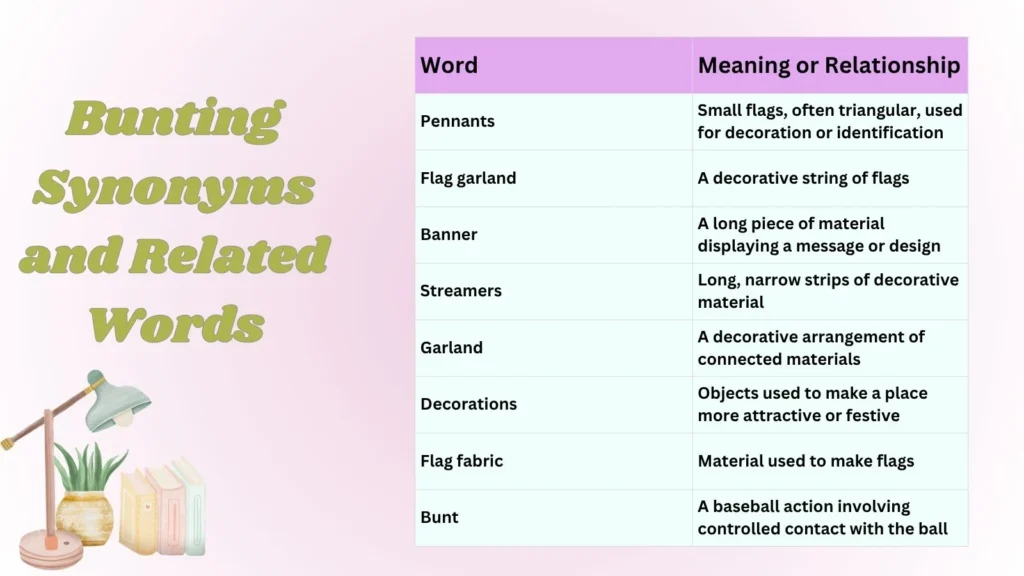
The best synonym for bunting depends on the meaning being used.
| Word | Meaning or Relationship |
|---|---|
| Pennants | Small flags, often triangular, used for decoration or identification |
| Flag garland | A decorative string of flags |
| Banner | A long piece of material displaying a message or design |
| Streamers | Long, narrow strips of decorative material |
| Garland | A decorative arrangement of connected materials |
| Decorations | Objects used to make a place more attractive or festive |
| Flag fabric | Material used to make flags |
| Bunt | A baseball action involving controlled contact with the ball |
These words are related but are not always interchangeable. For instance, streamers are usually long strips rather than individual flags, and a banner often displays a larger message.
How Is Bunting Used in Celebrations?
Bunting is popular at celebrations because it is simple, versatile, and visually noticeable.
It can be used to decorate a small room or a large outdoor area.
Birthday Parties
Bright bunting can be hung above a cake table, across a wall, or around a garden. Personalized designs can include the birthday person’s name or age.
Weddings
Fabric bunting is often used for outdoor weddings, rustic receptions, and informal celebrations. Colors can be chosen to match the wedding theme.
Festivals and Public Events
Organizers may hang bunting across streets, tents, stalls, or event spaces to create a festive environment.
School Celebrations
Schools may use bunting for sports days, cultural events, graduation parties, and seasonal activities.
National Holidays
Patriotic bunting can help create a celebratory atmosphere during national holidays and community gatherings.
The main purpose in these settings is decorative: bunting adds color, helps define a space, and makes an event feel special.
Bunting Examples in Sentences
Seeing bunting in different sentences helps clarify its meaning.
- “Colorful bunting decorated the hall for the wedding.”
- “We bought fabric bunting for the garden party.”
- “The school hung bunting across the entrance.”
- “Red, white, and blue bunting covered the street.”
- “She made paper bunting for her daughter’s birthday.”
- “The shop displayed seasonal bunting in its front window.”
- “The baseball player attempted a bunt to advance the runner.”
- “A yellowhammer is a type of bunting bird.”
- “The handmade bunting matched the party’s color scheme.”
- “The organizers used weather-resistant bunting for the outdoor festival.”
In the first six examples, bunting refers to decorations. In the seventh, the related word bunt describes a baseball technique. In the eighth, bunting refers to a bird.
Bunting vs. Pennants
Bunting and pennants can look similar, but their meanings are slightly different.
A pennant is typically a small flag, often triangular or tapered. Bunting commonly refers to a series of flags or pieces of material connected along a cord.
For example, a single triangular team flag might be called a pennant, while a row of triangular flags hung over a party table might be called bunting.
The distinction depends partly on the design and how the items are used.
How to Make Simple Bunting at Home
Making bunting can be an easy craft project for a party or special occasion.
You can use paper for a quick decoration or fabric for a reusable version.
Materials You May Need
- Colored paper or lightweight fabric
- String, ribbon, or cord
- Scissors
- A ruler
- A pencil
- Glue, tape, or fabric-safe adhesive
Basic Steps
- Choose the colors and pattern for your bunting.
- Draw matching triangles or other shapes on the paper or fabric.
- Cut out the shapes carefully.
- Arrange the pieces in the order you want.
- Attach them to a string using glue, tape, or suitable stitching.
- Leave enough string at both ends for hanging.
- Display the finished bunting in a suitable location.
If you plan to hang it outdoors, consider the weather and the strength of the material. Keep decorations away from flames, hot lights, and other potential hazards.
Common Mistakes About Bunting
Mistake 1: Thinking Bunting Only Means Party Decorations
Decorative flags are the most familiar meaning, but bunting can also refer to flag-making fabric, a type of bird, or a baseball technique.
Mistake 2: Confusing Bunting With a Single Flag
A single flag is not necessarily bunting. Bunting commonly describes a decorative arrangement of several flags or fabric pieces connected along a line.
Mistake 3: Using Bunting and Banner Interchangeably
Bunting usually consists of small flags or shapes, while a banner is generally a larger piece of material that may display a message, name, or design.
Mistake 4: Assuming Bunting Has the Same Meaning in Every Sport
In baseball, bunting is a recognized batting technique. In cricket, the term is not standard technical terminology, so the intended meaning should be interpreted from context.
Mistake 5: Assuming All Bunting Is Made From Fabric
Modern bunting can be made from paper, felt, plastic, and other materials. The word describes the decorative arrangement as well as its traditional fabric association.
FAQs:
What does bunting mean in simple terms?
Bunting usually means small flags or decorative fabric pieces attached to a string and displayed at parties, festivals, and other celebrations.
What is bunting used for?
Bunting is used to decorate homes, gardens, event venues, shops, schools, and public spaces. It is especially common at birthdays, weddings, festivals, and national celebrations.
What does bunting mean in British English?
In British English, bunting commonly refers to decorative strings of small flags used for celebrations, public events, and patriotic displays.
Is bunting the same as a flag?
Not exactly. A flag is generally an individual piece of material, while bunting often consists of several small flags or decorative shapes arranged along a string.
What is bunting made of?
Bunting may be made from cotton, felt, paper, plastic, or other lightweight materials. The material depends on the design and whether it is intended for indoor or outdoor use.
What does bunting mean in baseball?
In baseball, bunting is a batting technique in which the batter gently directs the ball into the field instead of making a full swing.
Is bunting a type of bird?
Yes. Bunting is the common name for certain small birds, including species such as the reed bunting and snow bunting.
What is the difference between bunting and pennants?
Pennants are individual small flags, often triangular or tapered. Bunting usually refers to a string or arrangement of multiple flags or decorative pieces.
Can bunting be used outdoors?
Yes. Bunting is often used outdoors at festivals, garden parties, and weddings. Weather-resistant materials are preferable when it will be exposed to wind, rain, or sunlight.
What is another word for bunting?
Depending on the context, related terms include flag garland, pennants, decorations, and garland. No single synonym fits every meaning of bunting.
Conclusion:
The bunting meaning depends on the context, but the most common definition is a string or arrangement of small flags or decorative pieces used to celebrate special occasions. Bunting adds color and character to birthdays, weddings, festivals, national holidays, and many other events.
The word can also refer to lightweight flag-making fabric, certain birds, and a specific batting technique in baseball. Understanding the context helps you identify the correct meaning.
Whether you encounter bunting in a decorating guide, a sports discussion, or a description of wildlife, remembering these different definitions will help you understand and use the word correctly.

I am Henry James and i am a passionate writer and language enthusiast behind PunPalace, a platform dedicated to exploring meanings, word origins, and simple explanations. My aims to make learning vocabulary easy, engaging, and accessible for everyone.