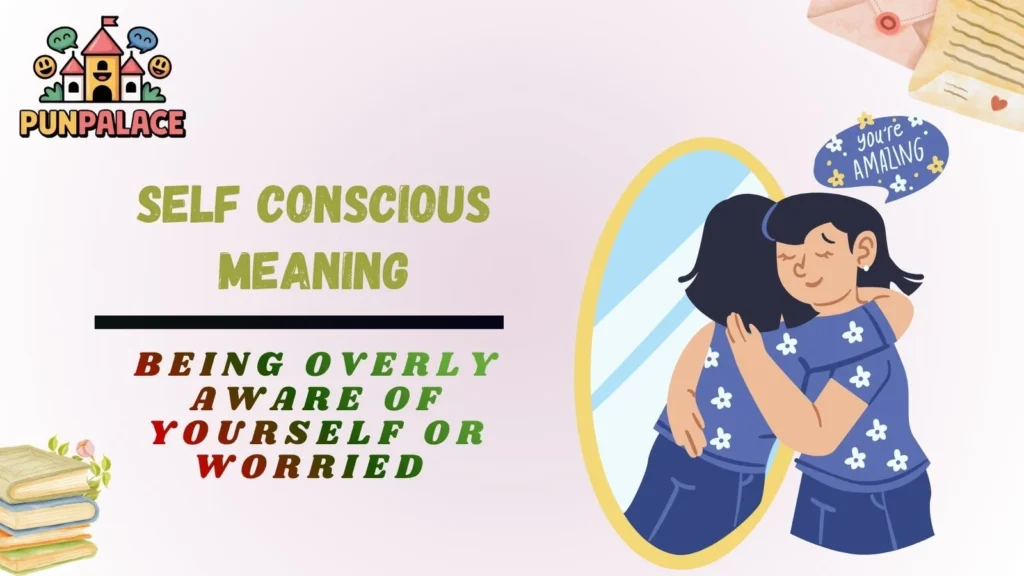
Self-conscious means being very aware of yourself, especially of how you look, behave, speak, or appear to other people. It often describes a feeling of embarrassment, nervousness, or insecurity because you think others are noticing or judging you.
For example, if someone feels uncomfortable speaking in front of a large group because they are worried about making a mistake, they may feel self-conscious.
The self conscious meaning can be positive or neutral in some contexts because being aware of yourself is not always negative. However, in everyday conversation, the word usually describes feeling uncomfortable or overly concerned about how others perceive you.
Simple definition: Self-conscious means being overly aware of yourself or worried about how other people see or judge you.
Self Conscious Meaning at a Glance 📖
| Term | Simple Meaning | Example |
|---|---|---|
| Self-conscious | Worried about how others see you | She felt self-conscious about her appearance. |
| Self-aware | Understanding your own feelings and behavior | He is very self-aware. |
| Insecure | Lacking confidence | She felt insecure about her abilities. |
| Embarrassed | Feeling uncomfortable because of something awkward | He felt embarrassed after making a mistake. |
What Does Self Conscious Mean in a Person? 👤
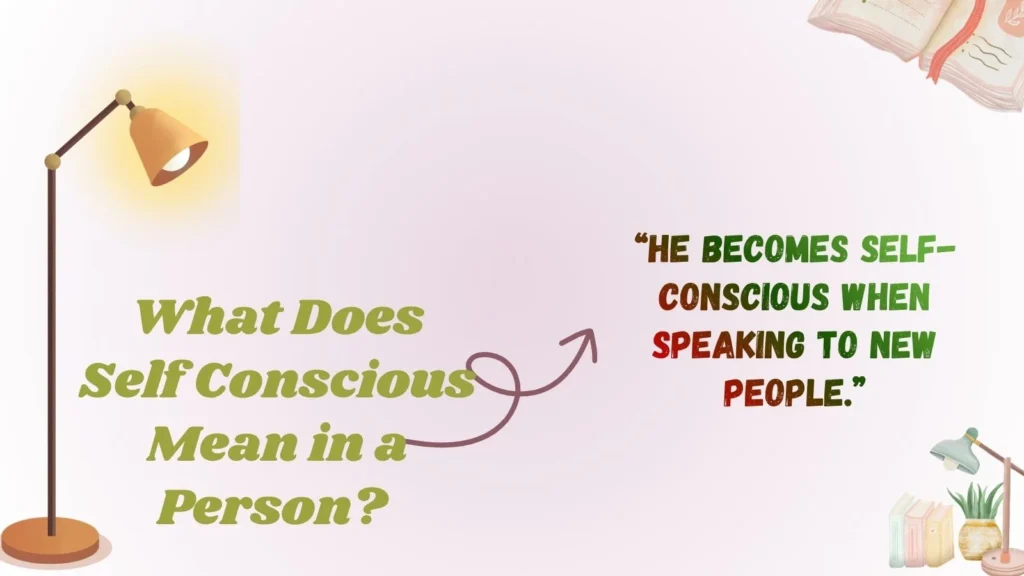
When someone is described as self-conscious, it usually means they pay a lot of attention to how they appear to others and may feel uncomfortable or nervous as a result.
For example:
“He becomes self-conscious when speaking to new people.”
This means he may worry about how he sounds, what he says, or how others perceive him.
Being self-conscious does not necessarily mean that someone lacks confidence in every part of life. A person may feel self-conscious in one situation but completely confident in another.
Self Conscious Meaning in a Sentence ✍️
Here are some common examples:
- “She felt self-conscious about her new hairstyle.”
- “He became self-conscious when everyone looked at him.”
- “I feel self-conscious when I speak in public.”
- “She was too self-conscious to dance in front of everyone.”
- “He felt self-conscious about making a mistake.”
In each example, the person is focused on how they might appear to other people.
Self Conscious Meaning in Social Situations 🗣️
Self-consciousness often appears in social situations. Someone may become very aware of their behavior and start worrying about whether others are judging them.
For example, a person attending a party where they do not know anyone might think:
“Am I standing awkwardly? Do I look nervous? What should I say?”
These thoughts can make someone feel self-conscious.
However, people often pay much less attention to us than we imagine. A person who feels self-conscious may believe everyone is noticing them when most people are actually focused on themselves.
Self Conscious About Appearance 👗
One of the most common uses of self-conscious relates to appearance.
For example:
“She felt self-conscious about her outfit.”
This means she was worried about how her outfit looked and how other people might react to it.
Someone might also feel self-conscious about a hairstyle, glasses, clothing, skin, or another aspect of their appearance.
The phrase does not necessarily mean that something is actually wrong with the person’s appearance. It describes how the person feels about being seen by others.
Self Conscious vs Self Aware 🧠
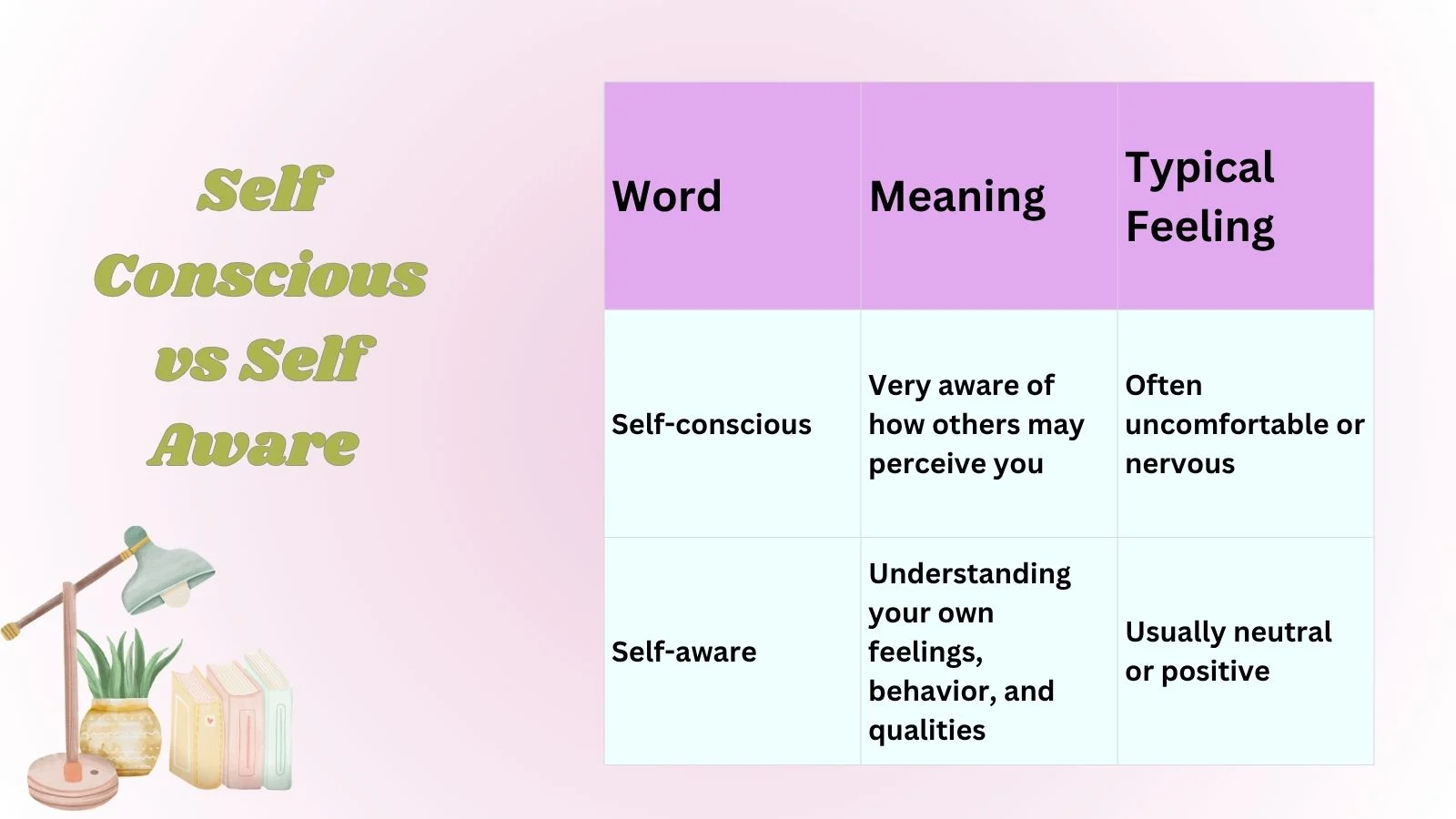
Self-conscious and self-aware sound similar, but their meanings are different.
| Word | Meaning | Typical Feeling |
|---|---|---|
| Self-conscious | Very aware of how others may perceive you | Often uncomfortable or nervous |
| Self-aware | Understanding your own feelings, behavior, and qualities | Usually neutral or positive |
For example:
“She is self-aware enough to recognize her weaknesses.”
This is generally positive.
“She felt self-conscious about her presentation.”
This suggests discomfort or worry about how others perceived her.
Self Conscious vs Insecure 🔄
Self-conscious and insecure can overlap, but they are not exactly the same.
Insecure usually means lacking confidence or feeling uncertain about yourself or your abilities.
Self-conscious emphasizes being overly aware of how you appear to other people.
For example:
“He feels insecure about his public-speaking skills.”
This focuses on his confidence.
“He feels self-conscious when speaking in front of an audience.”
This focuses on his awareness of being watched or judged.
Self Conscious vs Embarrassed 😳
Embarrassed usually describes a reaction to something that has already happened or an awkward situation.
Self-conscious can happen before, during, or after an event because someone is worried about how they are being perceived.
| Word | Meaning | Example |
|---|---|---|
| Self-conscious | Worried about how others perceive you | She felt self-conscious while giving her speech. |
| Embarrassed | Uncomfortable because of an awkward event | She felt embarrassed after forgetting her lines. |
Common Signs of Feeling Self Conscious 👀
People can experience self-consciousness in different ways. Common signs may include:
- Worrying about what others think
- Feeling awkward in social situations
- Overthinking what you said
- Feeling nervous when attention is on you
- Constantly checking your appearance
- Being afraid of making mistakes in front of others
- Avoiding situations where you may receive attention
Occasional self-consciousness is a common human experience. It can happen during presentations, interviews, parties, dates, or other situations where someone feels observed.
Why Do People Feel Self Conscious? 💭
Self-consciousness can arise for many different reasons. People naturally care about how they are perceived, especially in social situations.
Common triggers can include:
- Meeting new people
- Speaking in public
- Trying something unfamiliar
- Receiving criticism
- Making a mistake
- Changing one’s appearance
- Being the center of attention
- Comparing yourself with other people
The intensity of the feeling can vary from one person to another and from one situation to another.
How to Use Self Conscious Correctly ✍️
Self-conscious is an adjective. It usually comes after a linking verb such as “feel,” “become,” or “seem,” or before a noun.
Correct examples include:
- “I feel self-conscious.”
- “She became self-conscious.”
- “He is a self-conscious speaker.”
- “She felt self-conscious about her appearance.”
The spelling is commonly written with a hyphen: self-conscious.
Self Conscious Synonyms 🔤
Depending on the context, words with similar meanings include:
- Insecure
- Embarrassed
- Uncomfortable
- Nervous
- Awkward
- Uneasy
- Shy
- Unconfident
These words are not exact replacements in every sentence. For example, someone can be shy without feeling self-conscious, and someone can feel self-conscious in one situation without generally being shy.
Self Conscious Antonyms ↔️
Possible opposites include:
- Confident
- Relaxed
- Unselfconscious
- Comfortable
- Assured
- Composed
For example, someone who feels comfortable speaking in front of others may be described as confident rather than self-conscious.
Is Being Self Conscious Always Bad? 🌱
Not necessarily. Being aware of yourself can sometimes help you notice how your behavior affects other people.
However, excessive self-consciousness can become uncomfortable when someone constantly worries about being judged or observed.
In everyday language, the term usually focuses on the uncomfortable side of self-awareness. Still, occasional self-conscious feelings are a normal part of social life.
Common Mistakes When Using Self Conscious ❌
Confusing Self-Conscious With Self-Aware
These terms are not interchangeable. Self-aware means understanding yourself, while self-conscious often means worrying about how others perceive you.
Thinking Self-Conscious Means Shy
Shyness and self-consciousness can occur together, but they are different. A person may be self-conscious in a specific situation without generally being shy.
Assuming Self-Conscious Means Something Is Wrong
Feeling self-conscious does not mean that there is actually something wrong with your appearance or behavior. It describes a person’s perception and emotional reaction.
Confusing Self-Conscious With Embarrassed
Embarrassment often follows an awkward event, while self-consciousness can occur simply because someone thinks they are being watched or judged.
Using Self-Conscious as a Permanent Personality Label
Someone can feel self-conscious in one situation and confident in another. It is often more accurate to describe the specific situation rather than assume the feeling defines the entire person.
FAQs:
What does self-conscious mean in simple words?
Self-conscious means being very aware of yourself and worrying about how other people see or judge you.
Is self-conscious the same as insecure?
Not exactly. Insecure usually relates to a lack of confidence, while self-consciousness focuses more on being overly aware of how you appear to others.
What is an example of being self-conscious?
Someone who feels nervous because they think everyone is noticing their appearance or listening closely to everything they say may be feeling self-conscious.
What is the difference between self-conscious and self-aware?
Self-aware means understanding your own feelings and behavior, while self-conscious usually means worrying about how other people perceive you.
What is another word for self-conscious?
Depending on the situation, similar words include insecure, uncomfortable, nervous, embarrassed, uneasy, and awkward.
Final Thoughts:
The self conscious meaning is mainly about being highly aware of yourself, particularly because you are concerned about how other people perceive you.
Someone might feel self-conscious about their appearance, voice, behavior, or performance. The feeling can happen in social situations, during public speaking, or whenever a person feels that attention is focused on them.
Remember the simple idea: self-conscious means worrying about yourself and how you appear to others.

I am Henry James and i am a passionate writer and language enthusiast behind PunPalace, a platform dedicated to exploring meanings, word origins, and simple explanations. My aims to make learning vocabulary easy, engaging, and accessible for everyone.