
Have you ever come across the unusual word sassafras and wondered what it means? It may sound like the name of a magical plant, an old-fashioned ingredient, or even a character from a story. In reality, sassafras is the name of a group of trees native to eastern North America and parts of eastern Asia.
The word is most commonly used when talking about a sassafras tree, its leaves, roots, traditional uses, distinctive aroma, or historical role in food and herbal practices. The plant has also played an interesting part in American history.
In simple English, sassafras meaning refers to a fragrant tree or shrub whose leaves and roots have traditionally been used for flavoring and other purposes.
This guide explains the sassafras meaning in English, its origin, appearance, historical uses, flavor, pronunciation, common expressions, and the mistakes people often make when using the word.
What Does Sassafras Mean?
Sassafras is the common name for trees in the genus Sassafras. The best-known species is Sassafras albidum, a deciduous tree native to eastern North America.
The word can refer to the tree itself or, depending on context, to parts of the plant traditionally used for flavoring or other purposes.
In very simple English, you can understand sassafras as:
- A fragrant tree native to parts of North America.
- A plant known for its distinctive smell and flavor.
- A tree traditionally associated with roots and leaves used in various ways.
- The common name of a plant in the Sassafras genus.
For example:
“The sassafras tree has distinctive leaves.”
Here, “sassafras” refers to the plant.
Sassafras Meaning in Simple English

If you are looking for the easiest explanation, the sassafras meaning is a fragrant type of tree.
The tree is particularly interesting because its leaves can have different shapes, and its various parts have historically been used by people for food, beverages, fragrance, and traditional practices.
When someone says “sassafras,” they are generally talking about the plant rather than an abstract idea or emotion.
For example:
“We found a sassafras tree growing near the woodland.”
The word is therefore mainly a plant and nature term.
Sassafras Meaning at a Glance
| Term | Meaning |
|---|---|
| Sassafras | A fragrant tree or shrub in the genus Sassafras |
| Sassafras tree | A deciduous tree known for aromatic characteristics and distinctive leaves |
| Sassafras leaves | The leaves of the sassafras tree, which can occur in several characteristic shapes |
| Sassafras root | The root of the tree, historically used for flavoring and traditional purposes |
| Sassafras flavor | A distinctive aromatic flavor historically associated with the plant |
| Sassafras genus | The botanical genus to which sassafras trees belong |
What Is a Sassafras Tree?
A sassafras tree is a deciduous tree known for its aromatic properties and unusual leaf shapes.
The North American sassafras, Sassafras albidum, can grow into a medium-sized tree. It is found naturally in various habitats across the eastern and central parts of the United States.
One of its most recognizable characteristics is its leaves. A single sassafras tree can produce leaves with different shapes, including leaves that are unlobed, two-lobed, or three-lobed.
This variation makes the tree especially interesting to people learning about native plants.
The tree can also produce small flowers and dark-colored fruits surrounded by a red structure known as a cup-like base.
Where Does the Word Sassafras Come From?
The history of the word sassafras is fascinating because it has been connected to early European encounters with plants in the Americas.
The name entered English during the period when European explorers, settlers, and naturalists were describing plants found in North America.
The exact linguistic history is complex, and historical sources have proposed different explanations for how the name developed. However, the word became established as the common English name for the plant.
The botanical name Sassafras is now used as the genus name in scientific classification.
This means that when you see “sassafras” in a botanical context, you may be seeing either the common name or a reference connected with the scientific genus.
Sassafras Leaves and Their Unique Shapes
One of the most interesting features of sassafras is its leaves.
Unlike many trees where leaves on the same plant tend to have a uniform shape, sassafras can produce leaves with noticeably different forms.
They may appear:
- Unlobed, with a simple mitten-like appearance.
- Two-lobed, resembling a mitten.
- Three-lobed, with three distinct sections.
Because of this unusual variation, sassafras leaves can be a fun feature for people studying plants or exploring woodland environments.
The leaves can also have a pleasant aromatic quality when crushed.
What Does Sassafras Smell Like?
The sassafras meaning is sometimes searched by people who have encountered the word in descriptions of fragrance or flavor.
Sassafras has historically been associated with a distinctive aromatic smell. Descriptions can vary, but the scent is often characterized as spicy, sweet, earthy, or root-like.
Its aroma is one reason the plant became culturally important in traditional uses and historical food practices.
However, describing a smell is subjective. What one person considers sweet or spicy, another person may describe as earthy or herbal.
What Does Sassafras Taste Like?
Sassafras has historically been associated with a distinctive flavor that can be described as aromatic and somewhat spicy or root-like.
Its flavor became particularly famous through traditional beverages and culinary practices in parts of North America.
However, modern discussions of sassafras flavor require an important distinction: historical use of sassafras does not automatically mean that every modern sassafras product is safe or appropriate to consume.
Some traditional preparations contained safrole, a naturally occurring compound that has raised significant safety concerns. As a result, modern commercial products that evoke traditional sassafras flavors may use different ingredients or safrole-free flavoring.
Sassafras and Traditional Root Beer
One of the most famous historical associations with sassafras is root beer.
Sassafras root was historically used as a flavoring ingredient in traditional beverages. The connection became especially strong in American food culture.
Over time, concerns about safrole led to changes in commercial food practices. Modern root beer is not necessarily made from sassafras, and many commercial products use alternative flavorings.
Therefore, it is not accurate to assume that every bottle or can of root beer contains sassafras.
The historical connection remains important, though, which is why sassafras is often mentioned when people discuss the origins and traditional flavors of root beer.
Sassafras Root Meaning
The phrase sassafras root simply refers to the roots of the sassafras tree.
Historically, sassafras roots were used for flavoring and in traditional preparations. Indigenous peoples in North America also had their own longstanding uses for sassafras and other native plants.
European settlers later adopted some plant uses and developed additional traditions around sassafras.
Today, however, historical use should not be confused with a recommendation for consuming raw or homemade sassafras preparations. Plant chemistry and modern safety standards matter.
Sassafras in History
Sassafras has an important place in the history of North American plant use.
European colonists and explorers became interested in sassafras because of its fragrance and traditional uses. During the early colonial period, some people even viewed sassafras as a potentially valuable trade commodity.
The tree was harvested for its aromatic properties and became associated with traditional medicine, flavoring, and commerce.
This history demonstrates how plants can have meanings beyond their dictionary definitions. Sassafras was not simply a tree; it became part of cultural, economic, and culinary history.
Sassafras in Native American Traditions
Long before European settlers arrived, Indigenous peoples of North America had extensive knowledge of native plants, including sassafras.
Different Indigenous communities used plants in different ways, and those practices should not be treated as one universal tradition.
Sassafras was used historically for various practical and traditional purposes. Knowledge of native plants was often connected with food, materials, fragrances, and traditional wellness practices.
It is important to distinguish historical ethnobotanical information from modern medical advice. A traditional plant use does not automatically establish that a preparation is safe or medically effective.
Sassafras Meaning in a Sentence
Here are some simple examples showing how the word can be used naturally:
- “The sassafras tree grows naturally in parts of North America.”
- “I recognized the sassafras by its unusual leaves.”
- “The leaves of the sassafras tree can have different shapes.”
- “Sassafras has a distinctive aroma.”
- “The history of sassafras is connected with traditional American beverages.”
- “The children learned how to identify a sassafras tree.”
- “The woodland contained several young sassafras trees.”
- “Sassafras has been used historically for flavoring.”
- “The guide showed us the mitten-shaped sassafras leaves.”
- “Sassafras is an interesting native tree.”
Sassafras vs Other Aromatic Trees
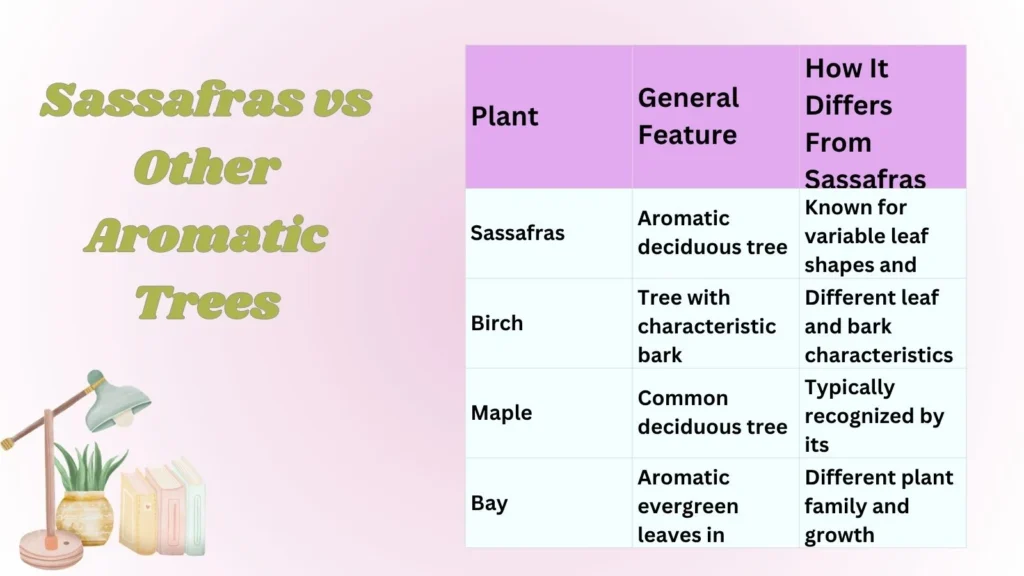
Sassafras is sometimes confused with other aromatic plants because many trees and herbs have distinctive scents.
| Plant | General Feature | How It Differs From Sassafras |
|---|---|---|
| Sassafras | Aromatic deciduous tree | Known for variable leaf shapes and distinctive aroma |
| Birch | Tree with characteristic bark | Different leaf and bark characteristics |
| Maple | Common deciduous tree | Typically recognized by its characteristic maple leaves |
| Bay | Aromatic evergreen leaves in commonly used culinary species | Different plant family and growth characteristics |
Knowing the differences is useful if you are identifying plants outdoors.
Is Sassafras a Spice?
This depends on how the word is being used.
Sassafras is primarily the name of a plant or tree, not the general name of a spice.
However, parts of the plant have historically been used for flavoring. This is why you may encounter phrases such as “sassafras flavor” or historical references to sassafras as an ingredient.
So, calling sassafras a spice is usually less precise than calling it an aromatic plant traditionally used for flavoring.
Sassafras and Modern Food Use
The historical food use of sassafras needs to be separated from modern food regulations and safety practices.
Safrole, a naturally occurring component of sassafras oil, has been identified as a substance of concern. Because of this, traditional sassafras preparations containing significant amounts of safrole are not treated the same way as modern commercial flavor products.
Modern products inspired by traditional sassafras flavors may use safrole-free alternatives or other flavoring ingredients.
This is an important distinction when reading old recipes or historical descriptions. A historical recipe should not automatically be treated as a safe modern recipe.
Sassafras Meaning in Nature and Gardening
For nature lovers, sassafras is more than a historical ingredient. It is also an interesting native tree.
Its unusual leaves, seasonal changes, and aromatic qualities make it recognizable in suitable habitats.
The tree can be attractive in natural landscapes, but anyone considering planting or collecting native plants should first check local conditions and regulations.
When used in gardening or botanical discussions, sassafras normally refers to the plant itself rather than its historical culinary uses.
Is Sassafras a Common Word?
Sassafras is a legitimate English word, but it is not an everyday word for most people.
You are more likely to see it in:
- Botanical articles.
- Nature guides.
- Plant identification books.
- American history discussions.
- Traditional food history.
- Gardening content.
- Herbal history.
- Discussions about root beer.
Because it is a specialized plant name, some people may encounter it for the first time when reading about trees or traditional ingredients.
How to Use Sassafras Correctly
The word sassafras is generally used as a noun.
You can use it to identify the tree:
“That is a sassafras tree.”
You can also use it when discussing the plant’s leaves:
“The sassafras leaves have distinctive shapes.”
Or when discussing historical flavor:
“Sassafras was historically associated with traditional root beer flavor.”
These examples show that the word can fit naturally into botanical, historical, culinary, and cultural discussions.
Sassafras Synonyms and Related Words
Because sassafras is a specific plant name, it does not have many exact synonyms.
Related terms include:
- Aromatic tree
- Native tree
- Deciduous tree
- Fragrant plant
- Sassafras tree
- Sassafras albidum
- Sassafras leaves
- Sassafras root
These terms are related to the word, but they are not all interchangeable. For example, “aromatic tree” describes a broader category, while “sassafras” identifies a particular plant.
Why Is Sassafras Interesting?
Sassafras stands out because it connects several areas of knowledge.
From a botanical perspective, it is an unusual native tree with distinctive leaves.
From a historical perspective, it was involved in early European interest in North American plants.
From a culinary perspective, it became associated with traditional flavoring and root beer history.
From a cultural perspective, the word appears in books, recipes, nature writing, and discussions of American heritage.
This combination makes sassafras much more interesting than a simple plant name.
Common Mistakes About Sassafras Meaning

1. Thinking Sassafras Is Only a Spice
Sassafras primarily refers to a plant or tree. Its historical use for flavoring is only one part of its meaning.
2. Assuming All Root Beer Contains Sassafras
Modern root beer products can use various flavoring ingredients. The historical connection with sassafras does not mean every modern product contains the plant.
3. Treating Historical Recipes as Modern Safety Advice
Old recipes may contain ingredients that are not considered appropriate under modern safety standards. Historical use and modern safety are different questions.
4. Confusing Sassafras With Any Aromatic Tree
Many plants have distinctive scents, but sassafras refers to a particular botanical group.
5. Assuming Every Sassafras Leaf Looks the Same
Sassafras is known for producing leaves with several different shapes, including unlobed, two-lobed, and three-lobed forms.
6. Assuming Traditional Plant Use Means Proven Medical Benefits
Historical or traditional use does not automatically establish modern medical effectiveness or safety.
7. Using Sassafras as a General Word for Plants
The word identifies a specific plant rather than plants in general.
Frequently Asked Questions About Sassafras Meaning
What does sassafras mean?
Sassafras is the common name for fragrant trees in the genus Sassafras, especially the North American species Sassafras albidum.
What is a sassafras tree?
A sassafras tree is a deciduous tree known for its aromatic qualities and distinctive leaves, including leaves that can have different lobed shapes.
What does sassafras taste like?
Sassafras has historically been associated with an aromatic, spicy, and root-like flavor. However, traditional sassafras preparations and modern safrole-free flavorings are not necessarily the same.
Is sassafras used in root beer?
Sassafras has a strong historical connection with traditional root beer flavoring. Modern commercial root beer may use other ingredients and should not automatically be assumed to contain sassafras.
Is sassafras a spice?
Sassafras is primarily a plant or tree rather than a spice. Parts of the plant have historically been used for flavoring, which explains its association with culinary ingredients.
Final Thoughts:
The sassafras meaning is relatively simple: it is the name of a fragrant tree in the genus Sassafras, especially the North American sassafras known as Sassafras albidum.
What makes the word fascinating is its history. Sassafras has been connected with Indigenous plant knowledge, early American history, traditional flavoring, root beer, botanical study, and native woodland environments.
Its unusual leaves and distinctive aroma also make the tree easy to remember once you learn about it.
When you encounter the word “sassafras,” look at the context. In a nature article, it probably refers to the tree. In a historical food discussion, it may refer to traditional flavoring. In a root beer discussion, it may refer to the plant’s historical connection with the beverage.

I am Henry James and i am a passionate writer and language enthusiast behind PunPalace, a platform dedicated to exploring meanings, word origins, and simple explanations. My aims to make learning vocabulary easy, engaging, and accessible for everyone.