Noticing a different color during your period can make you wonder whether everything is normal. Menstrual blood does not always look the same from one cycle to another, and its shade can change during the same period. Understanding period color meaning can help you recognize common patterns without immediately assuming that every color change signals a problem.
Period blood can appear bright red, dark red, brown, pink, or nearly black. The color is often affected by how long the blood has remained in the uterus or vagina before leaving the body. Flow level and hormonal changes can also influence how menstrual blood looks.
However, color is only one part of the picture. Changes in bleeding amount, timing, consistency, smell, pain, fever, or other symptoms can provide more useful information about what is happening.
In this guide, we will explain the meaning of different period blood colors, why menstrual blood changes color, which changes are commonly seen, and when it is sensible to speak with a healthcare professional. 🩸
What Does Period Color Mean?
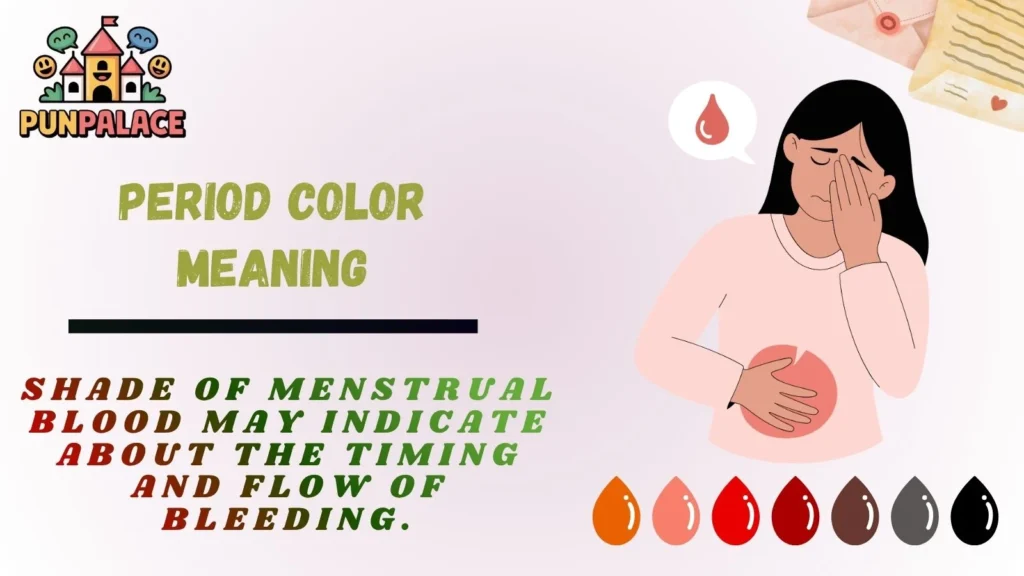
Period color meaning generally refers to what the shade of menstrual blood may indicate about the timing and flow of bleeding.
There is no single color that every person’s period should have. Menstrual blood is a mixture of blood, tissue from the uterine lining, mucus, and other vaginal fluids. Its appearance can naturally vary.
A simple guide is:
| Period Blood Color | Common Explanation |
|---|---|
| Bright red | Often newer blood leaving the body relatively quickly |
| Dark red | Can occur during heavier flow or as blood takes longer to leave |
| Brown | Often older blood that has taken longer to leave the body |
| Very dark brown or black | Often older blood, especially toward the beginning or end of a period |
| Pink | May occur when blood mixes with cervical or vaginal fluid or when flow is light |
| Orange | Can occur when blood mixes with vaginal discharge; persistent unusual color may warrant medical advice |
These descriptions are general. Period color alone cannot diagnose a medical condition.
Why Does Period Blood Change Color?
One of the main reasons menstrual blood changes color is oxidation.
When blood remains inside the reproductive tract for longer before leaving the body, it can become darker. This is why blood at the beginning or end of a period may look brown or very dark compared with blood during heavier flow.
Flow speed also matters. When menstrual blood leaves the body quickly, it may look brighter red. When it moves more slowly, it can appear darker.
Other factors that can influence menstrual blood appearance include:
- How heavy the menstrual flow is
- Where you are in your menstrual cycle
- How long blood remains in the reproductive tract
- Hormonal changes
- Pregnancy-related bleeding
- Medications or contraception
- Changes in menstrual patterns
Therefore, seeing different shades during one period can be completely normal.
Bright Red Period Blood Meaning
Bright red period blood is commonly associated with newer blood.
When menstrual blood leaves the body relatively quickly, it has had less time to darken. As a result, it can look bright or fresh red.
Bright red blood is especially common during the days when menstrual flow is stronger.
You may notice bright red blood:
- At the beginning of a period
- During heavier flow
- After getting up following a period of lying down
- When blood is moving through the vagina relatively quickly
Bright red blood by itself does not usually indicate a specific medical problem.
When Bright Red Blood May Need Attention
The color becomes more relevant when it occurs with very heavy bleeding or other concerning symptoms.
For example, seek medical advice if bleeding is unusually heavy for you, lasts significantly longer than expected, repeatedly disrupts daily activities, or is accompanied by symptoms such as severe pain, dizziness, fainting, or weakness.
Dark Red Period Blood Meaning
Dark red menstrual blood can be a normal part of a period.
Blood can become darker as it takes longer to leave the body. Dark red blood may therefore appear later in a period or during times when the flow is changing.
It may also appear alongside small clots, particularly during heavier menstrual bleeding.
The shade can range from deep red to burgundy or wine-like red. Individual lighting and bathroom conditions can also make the same blood look slightly different.
Dark red blood is generally interpreted together with the amount and duration of bleeding, rather than by color alone.
Brown Period Blood Meaning
Brown period blood is commonly associated with older blood.
When blood takes longer to leave the uterus and vagina, it can oxidize and become darker. Eventually, it may look brown rather than red.
Brown discharge or blood can be especially common:
- At the beginning of a period
- At the end of a period
- After a very light flow
- When menstrual blood leaves the body slowly
- After a period has nearly finished
For many people, occasional brown menstrual blood is simply part of a normal cycle.
Does Brown Period Blood Mean Old Blood?
Often, yes. Brown menstrual blood is commonly explained as older blood that has had more time to oxidize.
This does not mean that the blood is “bad” or that it has been trapped inside the body for an unusually long time. It simply means the blood has taken longer to leave the reproductive tract.
Black Period Blood Meaning
Very dark brown or nearly black period blood can also be older blood.
As blood becomes increasingly oxidized, it may become very dark. This can happen toward the end of a period when the flow is light and blood takes longer to leave the body.
Black-looking menstrual blood does not automatically mean something is wrong.
However, color should be considered alongside other symptoms. If very dark discharge is accompanied by a strong unpleasant odor, fever, significant pelvic pain, or unusual bleeding, medical advice is appropriate.
Pink Period Blood Meaning
Pink period blood may occur when a small amount of blood mixes with cervical mucus or vaginal fluid.
It can be more noticeable when menstrual flow is light.
Some people may see pinkish blood:
- At the beginning of a period
- Near the end of a period
- During very light bleeding
- When blood mixes with vaginal discharge
Pink bleeding can have different explanations depending on the timing and circumstances. For example, bleeding between periods or during pregnancy has different considerations from ordinary menstrual bleeding.
When Pink Bleeding Should Be Checked
If pink bleeding is new for you, occurs repeatedly between periods, happens after sex, or occurs during pregnancy, discussing it with a healthcare professional can help determine the cause.
Orange Period Blood Meaning
Orange-colored menstrual discharge can sometimes occur when blood mixes with vaginal discharge.
However, an unusual orange color can also occur alongside an infection, particularly when there are other symptoms.
Pay attention to accompanying signs such as:
- Unusual or strong odor
- Itching
- Burning
- Pelvic discomfort
- Fever
- Unusual vaginal discharge
If orange-colored discharge persists or occurs with these symptoms, a healthcare professional can help determine whether testing or treatment is needed.
Color alone is not enough to identify an infection.
Gray Period Blood Meaning
Gray vaginal discharge or bleeding is not usually described as a typical menstrual blood color.
If gray discharge occurs, especially with an unusual odor, irritation, pelvic discomfort, or other symptoms, it is worth seeking medical advice.
Gray discharge can sometimes be associated with vaginal infections or other conditions, so it should not simply be assumed to be an ordinary period color.
If pregnancy is possible and grayish tissue or discharge occurs with bleeding, prompt medical evaluation is particularly important.
Period Blood With Clots Meaning
Blood clots can occur during menstruation, especially when menstrual flow is heavier.
When blood and tissue collect before leaving the body, they may form jelly-like clumps or clots. Small clots can be a normal part of menstruation.
However, large or frequent clots combined with very heavy bleeding may deserve medical evaluation.
Consider speaking with a healthcare professional if you regularly experience unusually large clots, very heavy periods, prolonged bleeding, severe pain, or symptoms of anemia such as unusual fatigue or weakness.
Does Period Color Tell You About Your Health?
Period blood color can provide some clues about the age and flow of the blood, but it is not a reliable health test by itself.
For example, brown blood often reflects older blood. Bright red blood often reflects newer blood. Neither observation alone can tell you whether your reproductive system is healthy or unhealthy.
Other menstrual characteristics are often more useful, including:
- Cycle timing
- Bleeding duration
- Amount of blood loss
- Changes from your usual pattern
- Severity of cramps or pain
- Bleeding between periods
- Bleeding after sex
- Other physical symptoms
That is why healthcare professionals generally consider the whole menstrual pattern rather than focusing only on color.
Period Color Meaning at the Beginning of Your Period
The beginning of a period can look different from the middle of the cycle.
Some people begin with light pink or brown spotting before seeing a stronger red flow.
Others may experience bright red blood immediately.
Both patterns can occur because menstrual cycles vary naturally between people and even between individual cycles.
Brown spotting at the beginning of a period is often related to older blood leaving the body.
What Is a Normal Period Color?
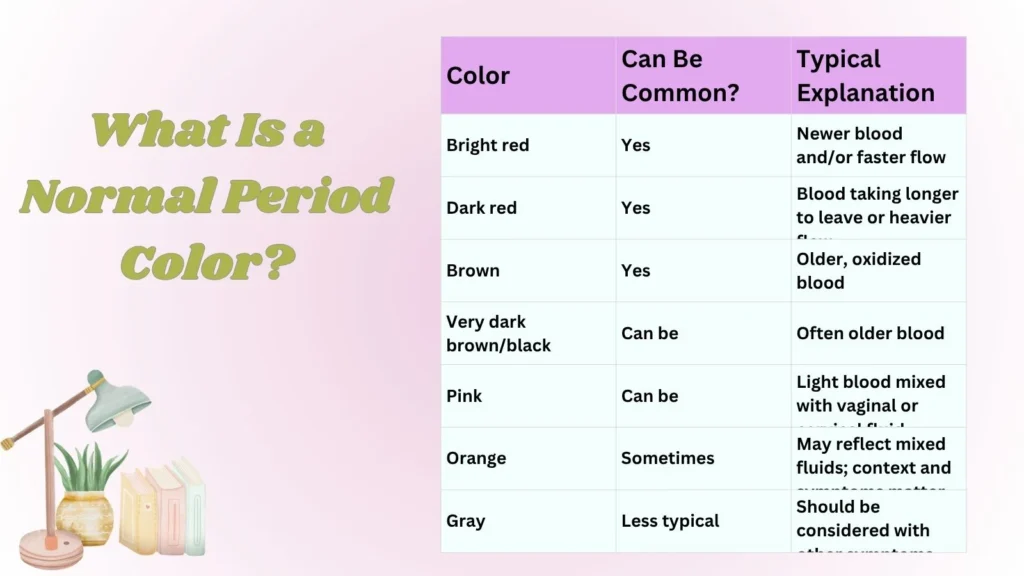
There is no single “perfect” period color.
Red, dark red, brown, and very dark brown or black-looking blood can all occur during a normal menstrual period.
Pink may also occur, particularly with light flow or when blood mixes with vaginal fluid.
The important point is that normal menstrual blood can look different at different stages of the same period.
| Color | Can Be Common? | Typical Explanation |
|---|---|---|
| Bright red | Yes | Newer blood and/or faster flow |
| Dark red | Yes | Blood taking longer to leave or heavier flow |
| Brown | Yes | Older, oxidized blood |
| Very dark brown/black | Can be | Often older blood |
| Pink | Can be | Light blood mixed with vaginal or cervical fluid |
| Orange | Sometimes | May reflect mixed fluids; context and symptoms matter |
| Gray | Less typical | Should be considered with other symptoms and context |
Period Color Meaning at the End of Your Period
At the end of a period, flow often becomes lighter. Blood may remain in the reproductive tract longer before leaving, which can make it appear brown, dark red, or very dark.
This is one of the most common explanations for dark menstrual blood near the end of a cycle.
You may also notice only a small amount of brown discharge rather than a traditional red flow.
Again, the overall pattern matters more than one isolated color.
Period Color Meaning During a Heavy Flow
During heavier menstrual bleeding, blood may appear bright red or dark red.
Because blood is moving more quickly, some of it may appear brighter. At the same time, blood that remains longer before leaving can become darker.
Heavy flow can also be associated with clots.
If your bleeding suddenly becomes much heavier than your normal period, especially if you are soaking through menstrual products very frequently or experiencing dizziness, weakness, shortness of breath, or fainting, seek medical care.
Period Color Changes From Month to Month
It is normal for menstrual blood color to vary between cycles.
Your period may be bright red one month and more brown the next. A change in flow, cycle timing, hormonal contraception, stress, or other factors may contribute to changes in your menstrual pattern.
What matters most is whether the change is persistent, unusual for you, or accompanied by other symptoms.
Tracking your period can make these changes easier to notice.
Period Blood Color and Hormonal Birth Control
Hormonal contraception can change menstrual bleeding patterns. Some people experience lighter periods, spotting, or changes in timing after starting or changing hormonal contraception.
Because lighter bleeding may contain a greater proportion of other vaginal or cervical fluid, it can sometimes appear different in color.
If a change occurs after starting a new contraceptive method, discuss unexpected or persistent bleeding with your healthcare provider, especially if it is bothersome or concerning.
Period Color During Pregnancy
Menstrual periods do not occur during an ongoing pregnancy, but bleeding during pregnancy can happen for different reasons.
Therefore, if pregnancy is possible, do not assume that unusual bleeding is simply a period based on its color.
Bleeding during pregnancy should be discussed with a healthcare professional, particularly when it is heavy or accompanied by pain, dizziness, fainting, or other concerning symptoms.
Urgent medical attention may be necessary for severe symptoms.
Period Color and Vaginal Odor
Menstrual blood can naturally have a mild metallic or blood-like smell. However, a strong, unpleasant, or unusual odor can be more important than color alone.
If unusual odor occurs with changes in discharge, itching, burning, fever, or pelvic pain, consider speaking with a healthcare professional.
These symptoms can sometimes indicate an infection or another condition that needs evaluation.
Period Color vs. Spotting
Spotting means light vaginal bleeding that is generally much lighter than a normal menstrual period.
Spotting may appear pink, red, or brown.
Because the amount of blood is small, it may mix with normal vaginal discharge and look different from typical period blood.
Spotting can happen for many reasons, including hormonal changes, contraception, ovulation, pregnancy, or other medical causes.
If spotting repeatedly occurs outside your normal period, occurs after sex, or represents a significant change in your usual cycle, it is worth discussing with a healthcare professional.
When Should You See a Doctor About Period Color?
A change in color alone is often not enough to indicate a health problem. However, it is a good idea to seek medical advice when a color change is accompanied by new, persistent, or concerning symptoms.
Consider medical evaluation if you experience:
- Very heavy menstrual bleeding
- Bleeding that lasts unusually long
- Severe or worsening pelvic pain
- Repeated bleeding between periods
- Bleeding after sex
- Fever
- Strong or unusual vaginal odor
- Persistent unusual discharge
- Repeatedly very large blood clots
- Dizziness, fainting, or unusual weakness
- Unexpected bleeding during pregnancy
If bleeding is extremely heavy or you have severe pain, fainting, significant weakness, or other emergency symptoms, seek urgent medical care.
How to Track Your Period Color
If you frequently notice changes in your menstrual blood, tracking your cycle can help you understand your personal pattern.
You can record:
- The first day of bleeding
- The last day of bleeding
- Flow level
- Approximate color
- Presence of clots
- Pain level
- Spotting between periods
- Other unusual symptoms
You do not need to obsess over tiny differences in shade. The goal is simply to identify meaningful changes from your normal pattern.
Does Dark Period Blood Mean Your Period Is Ending?
It can.
Dark red, brown, or very dark blood is common near the end of a period because menstrual flow may become lighter and blood can take longer to leave the body.
However, dark blood can also occur at other points in the menstrual cycle, so it is not a reliable way to predict exactly when your period will finish.
Does Bright Red Period Blood Mean Heavy Bleeding?
Not necessarily.
Bright red blood can occur during heavier flow because blood is leaving the body relatively quickly, but color alone cannot tell you how much blood you are losing.
If you want to assess whether your bleeding is unusually heavy, consider the amount, duration, frequency of changing menstrual products, clot size, and how you feel rather than relying on color.
Can Period Color Indicate an Infection?
Color alone generally cannot diagnose an infection.
Some unusual colors may be more concerning when they occur alongside symptoms such as strong odor, itching, burning, fever, pelvic pain, or unusual discharge.
For example, orange or grayish discharge may deserve medical evaluation depending on the accompanying symptoms and circumstances.
A healthcare professional may need to examine the discharge or perform testing to determine the actual cause.
Period Color Meaning: Quick Reference Guide
If you need a quick answer, use this guide:
- Bright red: Often newer menstrual blood.
- Dark red: Common during changing or heavier flow.
- Brown: Often older blood.
- Very dark brown or black: Often older blood, especially near the end of a period.
- Pink: May occur with light bleeding or mixed vaginal fluid.
- Orange: May be mixed with vaginal discharge; persistent unusual discharge should be evaluated.
- Gray: Not a typical period color and may warrant evaluation, particularly with other symptoms.
Remember: the meaning of period blood color depends on timing, flow, symptoms, and your usual menstrual pattern.
Common Mistakes When Interpreting Period Color

Assuming Every Dark Color Is Dangerous
Brown or very dark menstrual blood is often simply older blood. Dark color by itself does not automatically mean that something is wrong.
Thinking Bright Red Blood Is Always Abnormal
Bright red blood can be completely normal, especially when menstrual flow is moving quickly.
Using Color as a Diagnosis
Period color cannot diagnose conditions on its own. A healthcare professional considers the complete pattern and accompanying symptoms.
Ignoring Heavy Bleeding Because the Color Looks Normal
Even if blood is a typical red color, unusually heavy bleeding can still require medical attention. Amount and duration matter.
Assuming Brown Blood Means a Dirty Period
Brown blood does not mean your body is “dirty.” It is commonly the result of older blood becoming darker as it takes longer to leave the body.
Assuming One Unusual Cycle Means Something Is Seriously Wrong
Menstrual patterns can naturally vary. A single change does not necessarily indicate a medical problem, although persistent or concerning changes should be discussed with a healthcare professional.
Ignoring Other Symptoms
Unusual odor, severe pain, fever, dizziness, or significant changes in bleeding can be more important than color alone.
FAQs:
What is the most normal period blood color?
There is no single normal color. Bright red, dark red, brown, and very dark brown or black-looking blood can all occur during a normal period, depending on flow and timing.
What does brown period blood mean?
Brown period blood commonly means the blood is older and has taken longer to leave the body. It is especially common at the beginning or end of a period.
What does bright red period blood mean?
Bright red period blood usually indicates relatively newer blood that is leaving the body quickly. It is common during active menstrual flow.
What does black period blood mean?
Very dark brown or black-looking menstrual blood can be older blood that has undergone more oxidation. It can occur near the end of a period. Other symptoms should be considered if the change is unusual or persistent.
What does pink period blood mean?
Pink blood may occur when a small amount of menstrual blood mixes with cervical or vaginal fluid, particularly during light bleeding. Repeated unexpected spotting should be discussed with a healthcare professional.
When is period blood color concerning?
Color is more concerning when it occurs with symptoms such as very heavy bleeding, severe pain, fever, strong unusual odor, persistent abnormal discharge, dizziness, fainting, or unexpected bleeding during pregnancy.
Conclusion:
Understanding period color meaning can make menstrual changes feel much less confusing. Menstrual blood naturally changes appearance as it moves through the reproductive tract, and different shades can occur during the same period.
Bright red blood is often newer blood, while brown or very dark blood is commonly older blood that has had more time to oxidize. Pink blood may occur with light flow or when blood mixes with vaginal fluid.
The most important thing to remember is that period color alone cannot tell you whether something is medically wrong. Your overall menstrual pattern—including bleeding amount, duration, pain, timing, odor, and other symptoms—is more informative.
If a color change is persistent, very unusual for you, or occurs alongside concerning symptoms, speaking with a healthcare professional is the safest way to understand what is happening.

I am Henry James and i am a passionate writer and language enthusiast behind PunPalace, a platform dedicated to exploring meanings, word origins, and simple explanations. My aims to make learning vocabulary easy, engaging, and accessible for everyone.