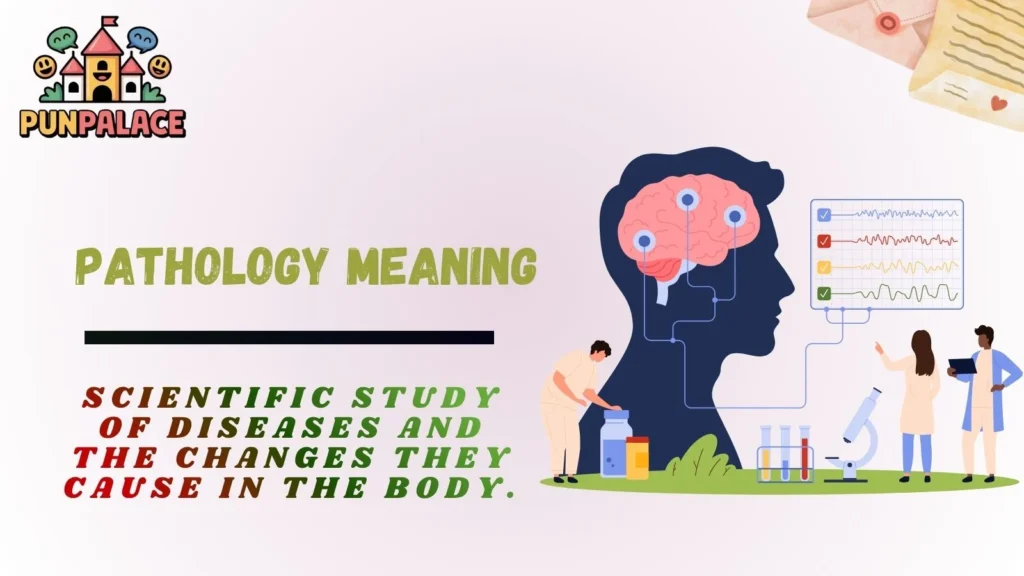
The word pathology refers to the study of diseases, including their causes, development, effects on the body, and the changes they produce in tissues and organs. In medicine, pathology helps doctors understand what disease a person may have and supports accurate diagnosis and treatment decisions.
In simple terms, pathology is the scientific study of what goes wrong in the body when someone becomes ill.
For example, if a doctor takes a small tissue sample from a patient and sends it to a laboratory for examination, a pathologist may study the sample under a microscope to look for signs of inflammation, infection, or cancer.
Understanding the pathology meaning is useful if you have seen the word on a medical report, heard it during a hospital visit, or want to learn more about medical science.
In this guide, you will discover the definition of pathology, its different types, real-life examples, the role of a pathologist, and the difference between pathology and related medical terms.
What Is the Meaning of Pathology?
Pathology means the scientific study of diseases and the changes they cause in the body.
The word is commonly used in medicine, biology, and healthcare. It covers how diseases develop, what causes them, how they affect tissues and organs, and how they can be identified through laboratory tests and examinations.
Pathology is important because many diseases cannot be diagnosed accurately through symptoms alone. Doctors may need information from blood tests, tissue samples, cells, or other laboratory investigations.
Here are a few examples of pathology in everyday medical practice:
- A blood sample is examined to investigate anemia.
- A tissue sample is studied to determine whether a growth is cancerous.
- A laboratory test identifies microorganisms associated with an infection.
- A biopsy is examined to investigate unexplained changes in an organ.
These examples show how pathology supports the diagnosis and understanding of disease.
Pathology Definition in Simple English

In simple English, pathology is the study of diseases and how they affect the human body.
Imagine that a person has persistent pain or unusual symptoms. A doctor may order laboratory tests to determine what is causing the problem. A pathologist can examine blood, cells, tissue, or other specimens to identify signs of disease.
For example, if a patient has a lump, a doctor may take a biopsy. A pathologist examines the tissue and prepares a report describing what the sample shows.
The report can help the doctor decide what further investigation or treatment may be appropriate.
Example sentence: The doctor requested a pathology test to help identify the cause of the patient’s symptoms.
Another example is: Pathology plays an important role in diagnosing diseases and monitoring certain medical conditions.
Pathology Meaning in Medical Terms
In medical terminology, pathology is the scientific discipline concerned with the causes, mechanisms, development, and effects of disease.
It helps healthcare professionals understand both the underlying biological processes of illness and the physical or chemical changes associated with those processes.
Medical pathology often involves examining:
- Blood and other body fluids.
- Cells collected from tissues.
- Biopsy specimens.
- Surgical tissue samples.
- Microorganisms associated with disease.
- Chemical substances measured in laboratory tests.
Pathology findings may help doctors diagnose infections, blood disorders, inflammatory conditions, genetic diseases, and cancers.
However, a pathology result is not always a complete diagnosis by itself. Doctors interpret findings alongside symptoms, medical history, physical examinations, imaging, and other relevant information.
What Is a Pathologist?
A pathologist is a medical specialist who studies disease and helps diagnose medical conditions by examining specimens, laboratory results, and other relevant evidence.
Pathologists often work in hospitals, diagnostic laboratories, research institutions, and specialized medical centers.
Their responsibilities may include:
- Examining tissue samples under a microscope.
- Interpreting blood and body-fluid test results.
- Identifying signs of infection or inflammation.
- Diagnosing certain cancers through tissue examination.
- Reviewing laboratory findings.
- Communicating important diagnostic information to other doctors.
- Supporting treatment decisions and disease monitoring.
For example, when a surgeon removes an unusual growth, the tissue may be sent to a pathology laboratory. A pathologist examines it to determine its nature and whether further evaluation is needed.
Pathologists do not all perform the same tasks. Their work depends on their area of specialization.
What Are the Main Types of Pathology?
Pathology includes several specialized branches. Each focuses on particular aspects of disease or different methods of diagnosis.
1. Anatomical Pathology
Anatomical pathology focuses on examining organs, tissues, and cells to identify disease-related changes.
Pathologists may examine samples obtained through biopsies, surgery, or postmortem examinations.
For example, a tissue sample from a suspicious skin lesion may be examined to determine whether it contains abnormal cells or signs of cancer.
Anatomical pathology is particularly important in diagnosing many tumors, inflammatory conditions, and diseases that produce structural changes in tissues.
2. Clinical Pathology
Clinical pathology focuses on diagnosing and monitoring diseases through laboratory analysis of blood, urine, and other body fluids.
It includes areas such as clinical chemistry, hematology, microbiology, and other laboratory disciplines.
For example, a blood test may reveal an abnormal number of red blood cells, while a urine test may provide information about kidney function or a possible urinary tract infection.
Clinical pathology helps doctors investigate symptoms, monitor chronic conditions, and evaluate responses to treatment.
3. Histopathology
Histopathology is the microscopic examination of tissue to identify changes associated with disease.
A tissue sample is usually processed, placed on a glass slide, and examined under a microscope.
For instance, when a doctor takes a biopsy from an abnormal area, histopathology can help determine whether the tissue shows inflammation, infection-related changes, benign growth, or malignancy.
Histopathology is a major part of diagnosing many diseases, including numerous types of cancer.
4. Cytopathology
Cytopathology focuses on examining individual cells or groups of cells to identify abnormalities.
Samples may be collected from body fluids, surface tissues, or fine-needle aspiration procedures.
A familiar example is cervical screening, in which cells are examined for changes that may indicate an increased risk of cervical cancer.
Cytopathology can help identify infections, inflammatory changes, and abnormal cells, although additional testing may sometimes be necessary.
5. Hematopathology
Hematopathology specializes in diseases affecting blood, bone marrow, lymph nodes, and related tissues.
It helps diagnose conditions such as certain anemias, leukemias, lymphomas, and other blood or lymphatic disorders.
For example, when blood test results show unusual blood cell counts, a doctor may request further investigations. A hematopathologist may examine blood or bone marrow samples to help determine the cause.
6. Molecular Pathology
Molecular pathology studies disease by examining biological molecules, including DNA, RNA, and proteins.
It can help identify genetic changes associated with certain inherited conditions, infections, and cancers.
For example, molecular testing may identify a genetic alteration in a tumor that helps doctors determine whether a targeted treatment could be appropriate.
These tests are often interpreted alongside other clinical and laboratory findings.
7. Forensic Pathology
Forensic pathology applies medical knowledge to investigate deaths, particularly when the cause or circumstances require legal examination.
Forensic pathologists may conduct autopsies, examine injuries, and review medical or investigative evidence.
For example, a forensic pathologist may investigate whether a death resulted from disease, injury, poisoning, or another cause.
Their findings can contribute to legal investigations and official determinations of cause of death.
8. Neuropathology
Neuropathology focuses on diseases affecting the brain, spinal cord, and nerves.
It may involve examining tissue samples to investigate neurological conditions, tumors, and certain degenerative diseases.
For example, a brain tissue sample may be examined to help characterize a tumor or investigate a suspected neurological disorder.
9. Microbiology and Infectious Disease Pathology
Medical microbiology focuses on microorganisms that cause disease, including bacteria, viruses, fungi, and parasites.
Laboratory specialists may use cultures, microscopy, molecular tests, and other techniques to identify infectious agents.
For example, testing a throat swab or blood sample may help identify the organism responsible for an infection.
The results can help clinicians select appropriate treatment when interpreted alongside the patient’s symptoms and medical history.
What Is a Pathology Test?
A pathology test is a laboratory investigation that examines a specimen to provide information about a person’s health.
Depending on the purpose of the test, the specimen may include blood, urine, tissue, cells, or another body fluid.
Common examples include:
- Complete blood count: Measures different types of blood cells.
- Blood glucose test: Measures glucose levels in the blood.
- Liver function tests: Measure substances that help assess liver health.
- Urine analysis: Examines urine for substances or changes associated with certain conditions.
- Biopsy examination: Studies tissue to identify abnormal changes.
- Microbiology testing: Investigates whether microorganisms are present.
- Molecular testing: Detects particular genetic material or molecular changes.
Not every test can identify every disease. Doctors select tests according to the patient’s symptoms, medical history, examination findings, and suspected condition.
Does Every Pathology Test Require Blood?
No. Many pathology tests use blood, but others require urine, tissue, cells, saliva, or different body fluids.
For example, a blood test may help assess blood cell counts, while a biopsy provides a tissue sample for microscopic examination.
The specimen required depends on the medical question the doctor is trying to answer.
Pathology Examples in Everyday Healthcare
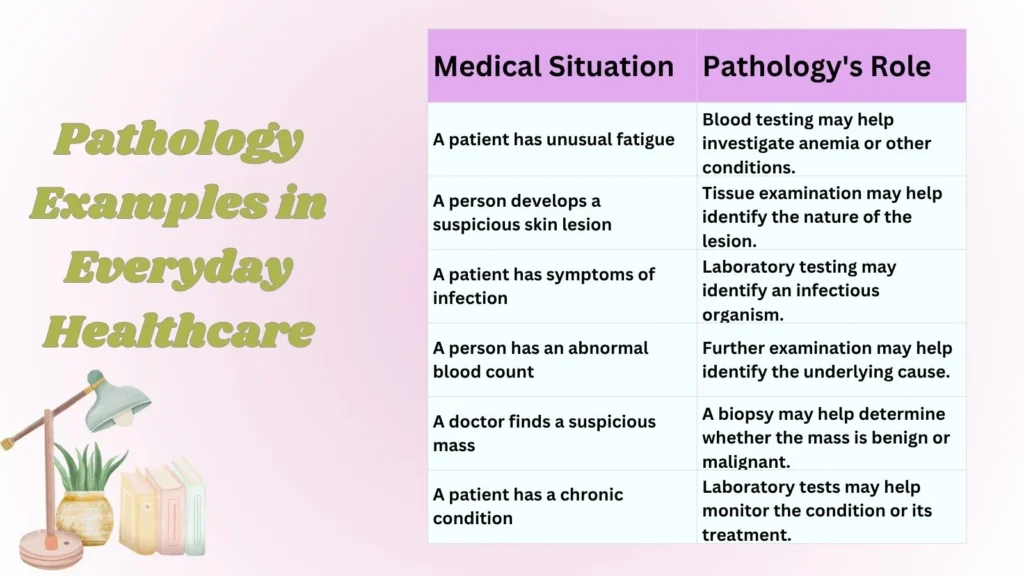
Pathology may sound like a complex scientific subject, but it plays a role in many routine medical situations.
| Medical Situation | Pathology’s Role |
|---|---|
| A patient has unusual fatigue | Blood testing may help investigate anemia or other conditions. |
| A person develops a suspicious skin lesion | Tissue examination may help identify the nature of the lesion. |
| A patient has symptoms of infection | Laboratory testing may identify an infectious organism. |
| A person has an abnormal blood count | Further examination may help identify the underlying cause. |
| A doctor finds a suspicious mass | A biopsy may help determine whether the mass is benign or malignant. |
| A patient has a chronic condition | Laboratory tests may help monitor the condition or its treatment. |
These examples illustrate why pathology is central to modern healthcare. It provides evidence that helps doctors understand what may be happening inside the body.
What Does a Pathology Report Mean?
A pathology report is a document that records the findings of an examination or laboratory investigation.
Its content depends on the type of test performed.
A report may include:
- The patient’s specimen information.
- The type of test or examination.
- Laboratory findings.
- A diagnostic interpretation.
- Additional testing recommendations, when appropriate.
A tissue pathology report may describe the appearance of cells and tissues, while a blood test report may provide measurements and reference ranges.
Some reports contain terms such as benign, malignant, inflammation, or abnormal cells. Their meaning depends on the context of the test.
For example, benign generally means noncancerous, while malignant indicates cancerous disease. However, the significance of a finding should always be interpreted in the context of the complete report.
If a pathology report contains unfamiliar terms, the ordering doctor can explain what the results mean for the individual patient.
Pathology Meaning in Cancer Diagnosis
Pathology is especially important in the diagnosis and classification of many cancers.
When a doctor suspects cancer, a tissue sample may be collected through a biopsy or surgical procedure. A pathologist examines the sample to look for cancerous changes and determine the type of tumor.
Depending on the case, additional tests may help establish:
- Whether cancer is present in the sample.
- The type of cancer.
- Certain features of the tumor.
- The grade of the tumor, when applicable.
- Whether particular molecular changes are present.
These findings can help doctors plan treatment and determine whether additional investigations are necessary.
It is important to distinguish between tumor grade and cancer stage. Grade describes certain features of how cancer cells look and behave, while stage generally describes how far the cancer has spread. Both may be important, but they provide different information.
A pathology report is one part of cancer assessment. Doctors may also use imaging, clinical examinations, and other investigations to understand the full situation.
Pathology vs. Physiology: What Is the Difference?
Pathology and physiology are related fields, but they focus on different aspects of the body.
| Pathology | Physiology |
|---|---|
| Studies diseases and disease-related changes. | Studies how the body normally functions. |
| Investigates what goes wrong in the body. | Explains how organs and body systems work. |
| Helps identify and characterize disease. | Explains normal processes such as breathing and circulation. |
| Example: Studying tissue changes caused by inflammation. | Example: Studying how the lungs exchange oxygen and carbon dioxide. |
A simple way to remember the difference is that physiology explains how the body works, while pathology examines disease and the changes associated with it.
Both fields are important for understanding human health and illness.
Pathology vs. Diagnosis
Pathology and diagnosis are not exactly the same.
Pathology is the scientific discipline that studies disease and includes many methods used to investigate medical conditions.
Diagnosis is the process of identifying a disease or condition based on available evidence.
Pathology findings may contribute significantly to a diagnosis, but doctors can also use symptoms, physical examinations, imaging, medical history, and other test results.
For example, a pathologist may identify a particular type of abnormal tissue, while the treating doctor considers that result alongside other information to determine the patient’s overall diagnosis and treatment plan.
What Does Pathological Mean?
The word pathological is the adjective related to pathology. In medical contexts, it usually describes something associated with disease or an abnormal disease-related process.
For example:
- Pathological changes: Changes in tissues or organs associated with disease.
- Pathological findings: Observations that may indicate a disease process.
- Pathological examination: An examination conducted to investigate disease-related changes.
- Pathological condition: A condition involving disease or abnormal bodily processes.
The word can also be used in psychology and everyday language to describe extreme or unhealthy patterns of behavior. In those contexts, its meaning depends on how it is being used.
What Does Pathology Mean in Psychology?
In psychology and mental health, pathology generally refers to the study or description of psychological disorders, symptoms, and patterns associated with mental illness.
For example, clinical professionals may study the causes, symptoms, and development of mental health conditions to improve assessment and treatment.
However, the word should not be used casually to label someone as mentally ill simply because their behavior seems unusual.
A psychological diagnosis requires an appropriate professional assessment, and a single behavior does not necessarily indicate a mental health disorder.
Is Pathology the Same as Disease?
No. Pathology and disease are closely related, but they are not interchangeable.
A disease is a condition that disrupts normal bodily or mental functioning.
Pathology refers to the scientific study of disease and, in certain medical contexts, the disease-related changes identified through examination.
For example, pneumonia is a disease, while pathology helps explain the changes associated with it and may contribute to identifying its cause.
The distinction is useful when reading medical information or speaking with healthcare professionals.
Why Is Pathology Important in Medicine?
Pathology plays a major role in modern medicine because it provides laboratory and tissue-based evidence about disease.
It Helps Doctors Diagnose Diseases
Laboratory findings can help doctors identify conditions that may not be apparent from symptoms alone.
It Supports Treatment Decisions
In certain conditions, pathology findings help doctors select appropriate treatments or determine whether additional tests are needed.
It Helps Monitor Health Conditions
Repeated laboratory testing can help healthcare professionals monitor selected diseases and evaluate how a patient responds to treatment.
It Supports Cancer Care
Tissue examination and molecular testing can help classify tumors and identify features that influence treatment decisions.
It Contributes to Medical Research
Pathology helps researchers understand how diseases develop and how they affect cells, tissues, and organs.
Together, these functions make pathology an essential part of healthcare, from routine blood testing to complex disease investigations.
Common Mistakes About Pathology

Mistake 1: Thinking Pathology Means Cancer
Pathology does not mean cancer. It is the study of diseases in general, including infections, inflammatory conditions, blood disorders, and many other illnesses.
Mistake 2: Assuming Every Pathology Test Uses Blood
Pathology tests can involve blood, urine, tissue, cells, and other specimens. The sample depends on the test.
Mistake 3: Confusing a Pathologist With a Pathology Test
A pathologist is a medical specialist, while a pathology test is an examination or laboratory investigation used to obtain medical information.
Mistake 4: Believing an Abnormal Result Always Means a Serious Disease
An abnormal result does not automatically indicate a serious illness. Its significance depends on the test, the degree of abnormality, and the patient’s overall medical situation.
Mistake 5: Assuming a Pathology Report Explains Everything
Some findings require additional tests or interpretation alongside other clinical information. A doctor can explain how the results relate to a patient’s symptoms and health.
FAQs:
What does pathology mean in simple words?
Pathology means the study of diseases and the changes they cause in the body. It helps healthcare professionals understand and diagnose medical conditions.
What is the basic definition of pathology?
Pathology is the scientific study of the causes, development, and effects of disease, including the changes that occur in cells, tissues, and organs.
What is a pathology test?
A pathology test is a laboratory examination of blood, urine, tissue, cells, or another specimen to provide information about a person’s health.
What is a pathologist?
A pathologist is a medical specialist who studies disease and helps diagnose medical conditions by examining specimens and interpreting laboratory findings.
Does pathology mean cancer?
No. Pathology covers all kinds of diseases, not just cancer. It includes the study of infections, inflammation, blood disorders, and many other conditions.
What are the main types of pathology?
Major areas include anatomical pathology, clinical pathology, histopathology, cytopathology, hematopathology, molecular pathology, forensic pathology, and neuropathology.
What is the difference between pathology and physiology?
Pathology focuses on disease and disease-related changes, while physiology studies how the body normally functions.
Why would a doctor order a pathology test?
A doctor may order a pathology test to investigate symptoms, identify a disease, evaluate an abnormal finding, monitor a medical condition, or assess a response to treatment.
Is pathology a medical field?
Yes. Pathology is a medical and scientific specialty that plays an important role in diagnosing diseases and supporting patient care.
What does pathological mean?
Pathological generally means related to disease or an abnormal disease-related process. Its precise meaning depends on the medical or everyday context.
How long does a pathology test take?
The time depends on the type of test. Some routine laboratory results may be available relatively quickly, while tissue examinations, specialized tests, and additional investigations may take longer.
What does a pathology report show?
A pathology report describes the findings of a laboratory test or specimen examination. It may include measurements, observations, diagnostic interpretations, and recommendations for further testing.
Conclusion:
The pathology meaning is the scientific study of diseases, their causes, and the changes they produce in the body. Pathology helps healthcare professionals investigate symptoms, identify medical conditions, classify diseases, and make informed treatment decisions.
Its main branches include anatomical pathology, clinical pathology, histopathology, cytopathology, and several other specialized fields. Pathology tests may examine blood, urine, tissue, cells, or other specimens, depending on the medical question.
Understanding pathology can make medical terminology and laboratory reports easier to follow. If you receive a pathology report, discuss its findings with your healthcare professional to understand what they mean for your particular situation.

I am Henry James and i am a passionate writer and language enthusiast behind PunPalace, a platform dedicated to exploring meanings, word origins, and simple explanations. My aims to make learning vocabulary easy, engaging, and accessible for everyone.