Have you ever heard someone mention a caravan and wondered exactly what they meant? The word can describe different things depending on the situation. In modern English, a caravan often refers to a vehicle used for traveling, camping, or temporary accommodation. In other contexts, it can mean a group of people or vehicles traveling together.
The caravan meaning becomes easier to understand when you look at the context. A person discussing a vacation might mean a travel trailer, while a history book might use the word for a group of travelers crossing a desert.
Simple definition: A caravan is commonly a vehicle or trailer designed for travel and temporary living, or a group of people or vehicles traveling together.
The word caravan has a long linguistic history. It entered English through European languages and ultimately traces back to a Persian term associated with a group of travelers or a traveling company.
Over time, the word spread into other languages and developed additional meanings. Its association with groups of travelers eventually contributed to its use for modern travel accommodation in some varieties of English.
This history explains why the word can still carry both travel-group and travel-vehicle meanings today.
Caravan Meaning at a Glance 📖
Feature
Meaning
Word
Caravan
Common Meaning
A trailer or vehicle used for travel and accommodation
Another Meaning
A group traveling together
Common Contexts
Travel, camping, transportation, history, and migration
Related Words
Trailer, camper, motorhome, convoy
What Does Caravan Mean? 🤔
A caravan can have more than one meaning. In British English and several other varieties of English, a caravan commonly means a towable vehicle or trailer used for accommodation.
It may contain sleeping areas, a small kitchen, storage, seating, and sometimes bathroom facilities. A car or another suitable vehicle can tow it from one location to another.
For example:
“We rented a caravan for our summer holiday.”
Here, caravan means a travel trailer or mobile accommodation.
The word can also describe a group of travelers or vehicles moving together. This older and broader meaning is especially common in historical or travel-related contexts.
Caravan Meaning in British English 🇬🇧
In British English, caravan commonly refers to a towable recreational vehicle. It is often used for vacations, camping trips, and longer stays at caravan parks.
For example:
“They spent the weekend in their caravan near the coast.”
This means they stayed in a travel trailer or similar mobile accommodation.
British speakers may also use the word caravan for certain temporary or mobile living spaces, depending on the context.
Caravan Meaning in American English 🇺🇸
In American English, people often use terms such as travel trailer, camper, or RV for vehicles that serve a similar purpose.
However, “caravan” is still an English word and can be understood in the United States, particularly when discussing British usage, historical travel, or groups traveling together.
This difference in vocabulary is important because the same type of vehicle may have a different everyday name depending on the country.
What Is a Caravan Vehicle? 🚐
A caravan vehicle, in the common recreational sense, is designed to provide a comfortable place to stay while traveling. Unlike a typical car, it may include areas specifically designed for sleeping, cooking, relaxing, and storing belongings.
A traditional caravan is usually towed by another vehicle. It does not normally have its own engine.
Common features may include:
Beds or sleeping areas
Seating
Small kitchen facilities
Storage cupboards
Tables
Lighting
Heating or cooling systems
Bathroom facilities in some models
The size and features can vary significantly from one caravan to another.
Caravan vs Motorhome 🔄
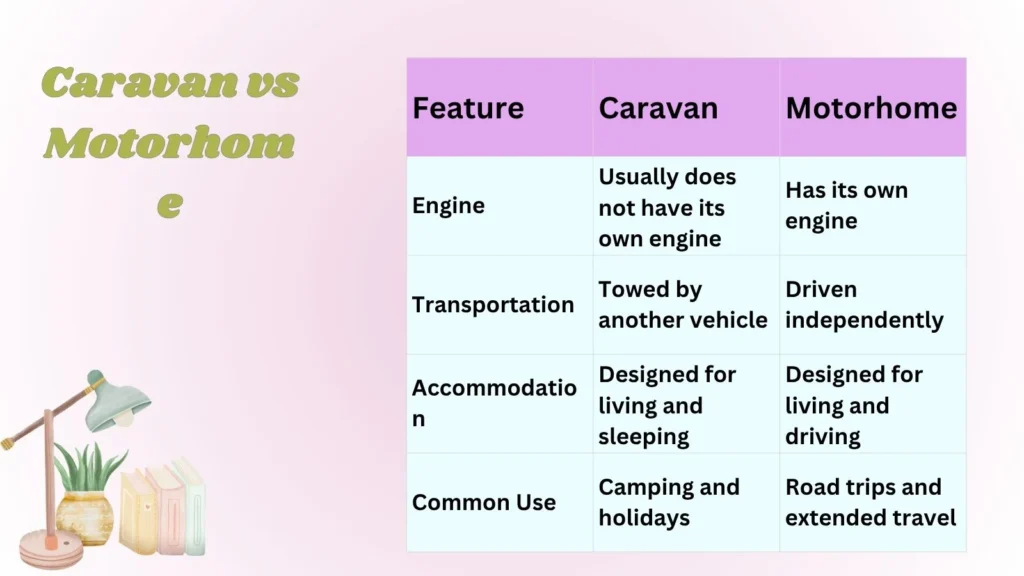
Although caravans and motorhomes can both provide accommodation during travel, they work differently.
Feature
Caravan
Motorhome
Engine
Usually does not have its own engine
Has its own engine
Transportation
Towed by another vehicle
Driven independently
Accommodation
Designed for living and sleeping
Designed for living and driving
Common Use
Camping and holidays
Road trips and extended travel
Both can provide a convenient way to travel while having access to basic living facilities.
A trailer is a broad term for an unpowered vehicle that is pulled by another vehicle. A caravan is a specific type of trailer designed primarily for travel and accommodation.
Therefore, every caravan can generally be considered a type of trailer, but not every trailer is a caravan.
For example, a trailer designed to transport construction materials is not normally called a caravan.
Caravan as a Group of Travelers 🏜️
The word caravan has another important meaning. Historically, it referred to a group of people, animals, or vehicles traveling together, particularly across long or difficult routes.
Traveling in a group provided practical benefits. Travelers could support one another and share resources during long journeys.
This meaning is often associated with historical trade routes, deserts, and long-distance journeys.
For example:
“The merchants traveled across the desert in a caravan.”
Here, caravan does not mean a travel trailer. It means a group of travelers moving together.
Historical Meaning of Caravan 📜
The historical use of the word is connected with organized groups of travelers who journeyed together, often for trade. Such groups could include merchants, animals carrying goods, guides, and other travelers.
Traveling together could provide greater security, organization, and practical support than traveling alone.
Caravans played an important role in long-distance commerce before modern transportation systems made international travel faster and easier.
Caravan Meaning in a Sentence ✍️
Here are some examples showing the different uses of the word:
“We stayed in a caravan during our holiday.”
“The family bought a new caravan for weekend trips.”
“A caravan of traders crossed the desert.”
“Several vehicles formed a caravan along the highway.”
“The children were excited to sleep in the caravan.”
Notice how the context determines whether caravan refers to accommodation or a traveling group.
Why Do People Use Caravans? 🏕️
Caravans are popular because they can combine travel and accommodation in one setup. Instead of booking a hotel for every stop, travelers can take their own sleeping and living space with them.
People may use caravans for:
Family holidays
Weekend trips
Camping
Road travel
Nature trips
Long vacations
Stays at caravan parks
For many travelers, a caravan provides greater flexibility about where and how they spend their vacation.
Common Caravan Features 🏡
Caravan designs vary, but many modern models are built to provide a surprisingly comfortable living environment.
Not every caravan includes all of these features, so buyers and renters should check the specific model.
Caravan Meaning in Travel and Holidays ✈️
When someone says, “We’re going on a caravan holiday,” they usually mean they are traveling and staying in a caravan rather than staying in traditional accommodation.
This type of vacation can offer a sense of independence. Travelers can often choose different destinations and spend more time outdoors.
For families, caravanning can also be an enjoyable way to combine sightseeing, camping, and comfortable accommodation.
Caravan Parks and Camping 🏕️
A caravan park is a place where people can stay with caravans, motorhomes, or other recreational accommodation. Depending on the location, facilities may include electricity connections, water, bathrooms, recreation areas, shops, and other services.
Caravan parks can range from simple camping areas to large holiday destinations with extensive facilities.
Always check the rules and available facilities of a specific park before planning a trip.
Common Mistakes About Caravan Meaning ❌
Thinking a Caravan Is Always a Group of People
Historically, caravan often meant a group of travelers. However, in modern British English, it commonly refers to a travel trailer used for accommodation.
Thinking a Caravan Is the Same as a Motorhome
They can serve similar purposes, but a traditional caravan is generally towed by another vehicle, while a motorhome has its own engine and can be driven independently.
Thinking Every Trailer Is a Caravan
Not every trailer provides living accommodation. A caravan is specifically associated with travel and temporary living.
Assuming Caravan Has the Same Meaning Everywhere
English vocabulary varies between countries. In Britain, “caravan” commonly means a travel trailer, while American speakers may more often say travel trailer, camper, or RV.
Confusing Caravan With Convoy
A convoy is a group of vehicles traveling together, while caravan can refer to either a travel accommodation vehicle or a group of travelers, depending on context.
FAQs:
What does caravan mean?
Caravan commonly means a travel trailer used for accommodation. It can also mean a group of people, animals, or vehicles traveling together.
What is a caravan used for?
A caravan is commonly used for holidays, camping, road trips, and temporary accommodation. It can provide sleeping, cooking, seating, and storage facilities.
Is a caravan the same as an RV?
Not exactly. The term RV can cover several types of recreational vehicles. A traditional caravan is generally a towable accommodation unit, while many RVs are motorized.
What is the difference between a caravan and a trailer?
A caravan is a type of trailer designed for travel and accommodation. The word trailer is broader and can describe many unpowered vehicles used for transporting different things.
What did caravan originally mean?
The older meaning referred to a group of travelers journeying together, particularly in long-distance trade and travel. The modern accommodation meaning developed later in English usage.
Final Thoughts:
The caravan meaning depends on context. In modern British English, a caravan commonly means a towable travel trailer designed for accommodation. It can provide sleeping, cooking, seating, and storage space while people travel.
Historically, however, a caravan referred to a group of travelers moving together, often for trade or long-distance journeys. This older meaning is still found in historical and literary contexts.
Whether you encounter the word while reading about holidays, camping, transportation, or history, looking at the surrounding sentence will usually make its meaning clear. 🚐
I am Henry James and i am a passionate writer and language enthusiast behind PunPalace, a platform dedicated to exploring meanings, word origins, and simple explanations. My aims to make learning vocabulary easy, engaging, and accessible for everyone.