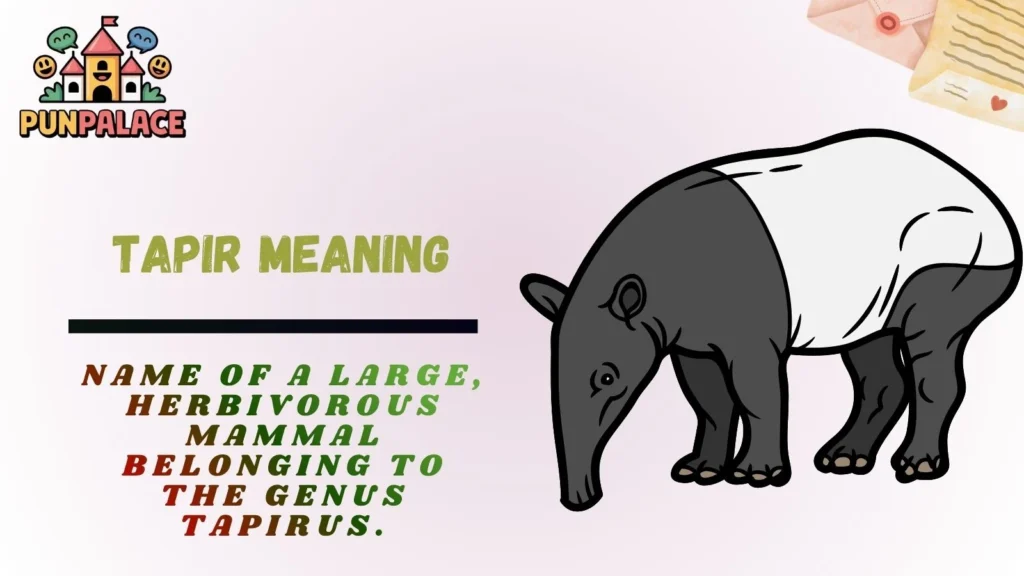
What comes to mind when you hear the word tapir? If you picture a strange-looking animal with a short trunk-like nose, you are thinking of the right creature. The tapir meaning refers to a unique large mammal known for its unusual appearance, strong body, and flexible snout.
Tapirs may look like a mixture of several familiar animals, but they belong to their own fascinating group. They are mammals related more closely to horses and rhinoceroses than to pigs or elephants, despite their somewhat unusual appearance.
The word tapir can simply refer to the animal itself, but people may also encounter the term in discussions about wildlife, conservation, nature, symbolism, children’s books, and even online culture. 🐾
In this guide, we will explain what a tapir is, where tapirs live, what they eat, how they behave, the different species, their importance in ecosystems, and what tapirs can symbolize.
What Does Tapir Mean?
Tapir is the name of a large, herbivorous mammal belonging to the genus Tapirus.
Tapirs are recognized by their:
- Large, sturdy bodies
- Short legs
- Flexible trunk-like snouts
- Rounded ears
- Small tails
- Hoofed feet
Their snout is one of their most distinctive features. It is flexible and can be moved to help the animal grab leaves, fruit, and other vegetation.
In simple English, the tapir meaning is simply a large plant-eating mammal with a short, flexible nose or trunk-like snout.
Tapir Definition in Simple English

A tapir is a large mammal that lives mainly in forests, wetlands, and other suitable habitats in parts of Central and South America and Southeast Asia.
Tapirs are herbivores, meaning they mainly eat plant material.
Although a tapir may look somewhat like a combination of a pig, horse, and elephant, it is not a hybrid of these animals. Its unusual body shape is the result of its own evolutionary history.
Simple definition: A tapir is a large herbivorous mammal with a flexible, trunk-like snout.
What Does a Tapir Look Like?
Tapirs have a distinctive appearance that makes them easy to recognize once you know what to look for.
Most tapirs have:
- A large barrel-shaped body
- Short but strong legs
- A flexible upper lip and nose
- Small eyes
- Rounded ears
- A short tail
- Hoof-like toes
The flexible snout is particularly important because tapirs use it to pull leaves and other vegetation toward their mouths.
Their bodies are generally bulky, but their short legs help them move through dense vegetation and difficult forest terrain.
Why Does a Tapir Have a Trunk-Like Nose?
A tapir’s nose and upper lip form a short, flexible structure that resembles a tiny trunk.
Unlike an elephant’s trunk, a tapir’s snout is much shorter. However, it serves a similar practical purpose: helping the animal grasp and manipulate food.
A tapir can move its snout while searching for leaves, fruit, shoots, and other vegetation.
The snout is also useful for exploring its surroundings.
This unusual feature is one of the main reasons tapirs are sometimes described as animals that look like a mixture of different species.
Are Tapirs Related to Horses?
Yes. Despite their appearance, tapirs are more closely related to horses and rhinoceroses than they are to pigs.
Tapirs and these animals belong to a group of mammals known as perissodactyls, or odd-toed ungulates.
This means their evolutionary relationships are quite different from what their appearance might suggest.
The resemblance between a tapir and a pig is mainly superficial. Tapirs have their own distinct evolutionary lineage.
Where Do Tapirs Live?
Tapirs are found in two major parts of the world: the Americas and Southeast Asia.
Different tapir species occupy different geographic regions.
They can live in habitats such as:
- Tropical rainforests
- Cloud forests
- Wetlands
- Swamps
- Grassland areas near forests
- River and stream environments
Tapirs often prefer areas where water and vegetation are readily available.
Where Are Tapirs Found?
Tapirs are naturally found in several countries across Central and South America, as well as in parts of Southeast Asia.
American tapir species occur in areas of Central and South America, while the Malayan tapir is found in parts of Southeast Asia.
Their geographic distribution depends on the species.
Habitat loss and other human-related pressures have reduced tapir populations in many regions.
Types of Tapirs
There are several recognized living tapir species. Each has distinctive characteristics and geographic ranges.
| Tapir Species | General Region | Notable Feature |
|---|---|---|
| Malayan Tapir | Southeast Asia | Distinctive black-and-white coloration |
| South American Tapir | South America | Generally brown or grayish appearance |
| Baird’s Tapir | Central America and parts of northern South America | Large body and pale markings on face and throat |
| Mountain Tapir | Andean regions | Adapted to high-elevation environments |
| Little Black Tapir | Parts of South America | Recognized as a distinct tapir species in modern classifications |
Scientific classifications can change as researchers learn more about animal populations and genetics.
Malayan Tapir Meaning
The Malayan tapir is especially recognizable because of its striking black-and-white body pattern.
Adults often have dark coloring on much of the front and back portions of their bodies, while the middle section is much lighter.
This unusual pattern helps make the Malayan tapir one of the most visually distinctive tapir species.
It is native to parts of Southeast Asia and is also commonly called the Asian tapir.
South American Tapir Meaning
The South American tapir is one of the tapir species found across parts of South America.
It generally has a darker, more uniform body color compared with the strongly contrasting pattern of the Malayan tapir.
Like other tapirs, it is a herbivore and plays an important ecological role by consuming vegetation and moving through forests.
What Do Tapirs Eat?
Tapirs are herbivores, so their diet consists mainly of plant material.
They may eat:
- Leaves
- Fruit
- Young shoots
- Grasses
- Aquatic plants
- Twigs
- Other soft vegetation
The exact diet varies depending on the species and its habitat.
The tapir’s flexible snout makes it easier to reach and collect food from plants.
Are Tapirs Herbivores?
Yes, tapirs are herbivores.
They spend much of their feeding time searching for plant-based food. Their diet can change according to the season and what vegetation is available in their environment.
Fruit can be an important part of the diet for some tapirs, making them valuable participants in forest ecosystems.
Are Tapirs Dangerous?
Tapirs are generally shy and solitary animals that prefer to avoid humans.
They are not naturally aggressive toward people, but they are still powerful wild animals and should be treated with caution.
If a tapir feels threatened, cornered, or attacked, it may defend itself.
People should never attempt to approach, touch, feed, or corner a wild tapir.
Tapir Behavior
Tapirs have several interesting behavioral characteristics.
Many tapirs are:
- Solitary
- Quiet
- Shy around humans
- Strong swimmers
- Active during cooler parts of the day or at night, depending on species and conditions
- Closely associated with water
Their behavior can vary by species, habitat, season, and individual animal.
Can Tapirs Swim?
Yes, tapirs are excellent swimmers.
Water can provide tapirs with several benefits. They may enter rivers, ponds, and other bodies of water to cool themselves, escape threats, or search for food.
Tapirs are surprisingly comfortable in water despite their large bodies.
Their relationship with water is one of the reasons wet habitats are important to their survival.
Why Do Tapirs Spend Time in Water?
Tapirs may use water for several reasons:
- Cooling their bodies
- Escaping predators
- Removing insects
- Searching for aquatic vegetation
- Moving through their environment
Water can therefore function as both a shelter and a useful resource.
Are Tapirs Nocturnal?
Some tapirs are particularly active during the night or twilight hours, although activity patterns can vary by species and environment.
Being active during darker or cooler periods may help tapirs avoid heat and reduce encounters with humans or predators.
However, calling every tapir strictly nocturnal would be an oversimplification.
Tapir Habitat
Tapirs are closely associated with environments that provide plenty of vegetation and access to water.
Depending on the species, their habitat may include:
- Lowland tropical forests
- Mountain forests
- Wetlands
- Riverbanks
- Swamps
- Forest edges
Mountain tapirs are especially notable because they live at higher elevations than most other tapir species.
Tapirs and Forest Ecosystems
Tapirs play an important ecological role in their environments.
One of their most important contributions is seed dispersal.
When tapirs eat fruit, they can later move through the forest and deposit seeds elsewhere. This can help plants spread across their habitat.
Because of this role, tapirs are sometimes described as important forest gardeners.
Their movement through large areas also connects different parts of an ecosystem.
Tapir vs. Anteater
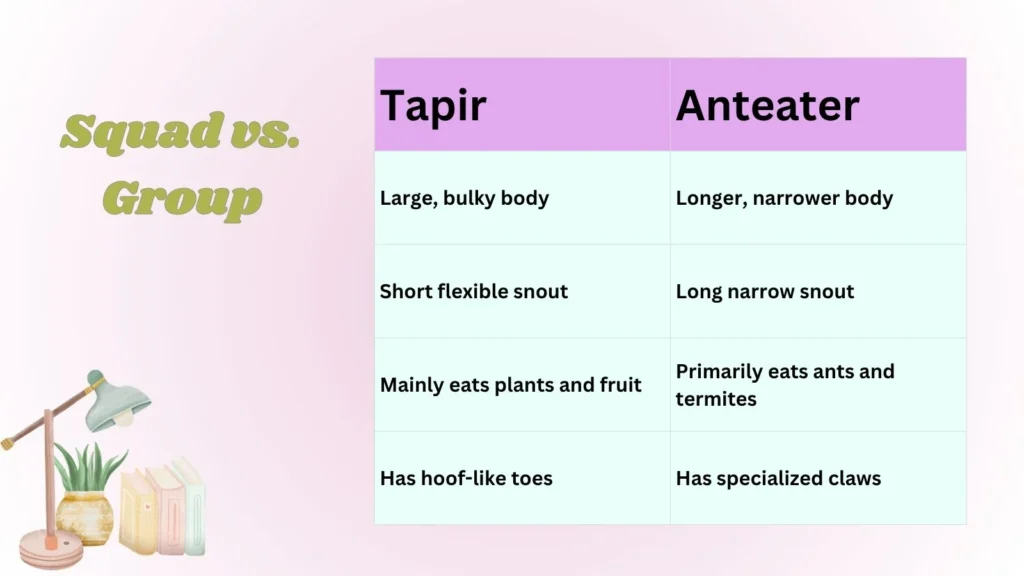
Tapirs and anteaters can sometimes be confused because both have unusual snouts, but they are very different animals.
| Tapir | Anteater |
|---|---|
| Large, bulky body | Longer, narrower body |
| Short flexible snout | Long narrow snout |
| Mainly eats plants and fruit | Primarily eats ants and termites |
| Has hoof-like toes | Has specialized claws |
The two animals belong to completely different mammalian groups.
Tapir Symbolism and Spiritual Meaning
In symbolic interpretations, tapirs can represent qualities such as:
- Adaptability
- Quiet strength
- Patience
- Connection with nature
- Groundedness
- Resilience
- Gentle independence
These meanings are cultural or personal interpretations rather than scientifically established facts.
Because tapirs are unusual-looking but generally peaceful animals, they may also symbolize the idea that being different can be a strength.
Tapir Meaning in Dreams
If someone dreams about a tapir, the meaning can vary depending on the person’s experiences, emotions, and cultural beliefs.
Symbolically, a tapir dream might be associated with:
- Adapting to an unfamiliar situation
- Staying calm during change
- Connecting with nature
- Quiet confidence
- Moving slowly toward a goal
- Being comfortable with individuality
There is no scientifically proven universal meaning for dreaming about a tapir. Dream interpretation is personal and depends on context.
Tapir Meaning in Different Cultures
Tapirs have appeared in the cultural traditions, folklore, art, and stories of people living in regions where these animals naturally occur.
Their unusual appearance has also made them memorable characters in modern books, documentaries, zoos, educational programs, and wildlife media.
Because symbolism differs between cultures, there is no single universal cultural meaning for the tapir.
Tapir vs. Pig
A tapir may look somewhat pig-like because of its rounded body and short tail, but tapirs are not pigs.
Tapirs are more closely related to horses and rhinoceroses.
Unlike pigs, tapirs have a flexible trunk-like snout and an unusual hoof structure associated with their evolutionary group.
Tapir vs. Elephant
The most obvious similarity between a tapir and an elephant is the flexible nose-like structure.
However, a tapir’s snout is much shorter and is structurally different from an elephant’s trunk.
Elephants are also much larger and belong to a completely different mammalian group.
Tapir Size and Weight
Tapirs are large mammals, but their size varies between species.
Some species can weigh several hundred pounds, while the largest individuals can become considerably heavier.
The Malayan tapir is generally one of the largest living tapir species.
Body size can vary according to species, age, sex, habitat, and individual health.
How Long Do Tapirs Live?
Tapirs can live for many years, particularly under human care where food, veterinary care, and protection from predators are available.
Wild tapir lifespan can vary considerably depending on species, habitat conditions, disease, predators, human activity, and access to food.
Because different studies and populations produce different estimates, there is no single lifespan that applies equally to every tapir.
Baby Tapir Meaning and Appearance
Baby tapirs are called calves.
Young tapirs often have a striking pattern of light-colored spots and stripes against a darker background.
This pattern can help camouflage them within the forest environment.
As the calf grows, the juvenile markings gradually change and the adult coloration develops.
Are Tapirs Endangered?
Several tapir species face serious conservation challenges.
Major threats include:
- Habitat destruction
- Deforestation
- Road development
- Hunting
- Habitat fragmentation
- Human-wildlife conflict
The conservation status differs among species, but protecting forests and connected habitats is essential for tapir populations.
Why Are Tapirs Important?
Tapirs are important not only because they are unique animals but also because they contribute to ecosystem health.
Their role as seed dispersers can influence the distribution and regeneration of plants.
Protecting tapirs can therefore help protect the larger ecosystems in which they live.
Interesting Facts About Tapirs
- Tapirs have existed in various forms for millions of years.
- They are more closely related to horses and rhinoceroses than pigs.
- Tapirs are excellent swimmers.
- Their flexible snout helps them collect food.
- They are primarily herbivores.
- Several species are associated with forests and wetlands.
- Tapirs can help disperse seeds through their feeding habits.
- Baby tapirs often have striped and spotted camouflage patterns.
- The Malayan tapir has distinctive black-and-white coloration.
- Tapirs can be shy and generally avoid unnecessary contact with humans.
Tapir Pronunciation
The word tapir is commonly pronounced approximately as:
TAY-peer or TUH-peer, depending on accent and pronunciation style.
Pronunciation can vary between English speakers and regions.
Tapir Synonyms and Related Words
There is no perfect everyday synonym for tapir because it is the specific name of an animal.
Related terms include:
- Tapirus
- Herbivorous mammal
- Odd-toed ungulate
- Forest mammal
- Malayan tapir
- South American tapir
- Mountain tapir
- Baird’s tapir
Calling a tapir a “forest pig” may describe its appearance informally, but it is not a scientific synonym.
Examples of Tapir in a Sentence
- “The tapir walked quietly through the rainforest.”
- “We learned about the tapir during our wildlife lesson.”
- “The tapir used its flexible snout to reach the leaves.”
- “The Malayan tapir has a distinctive black-and-white pattern.”
- “Tapirs can swim across rivers surprisingly well.”
- “The conservation project is working to protect the tapir’s habitat.”
Common Mistakes About Tapir Meaning

Thinking a Tapir Is a Type of Pig
Tapirs may look somewhat pig-like, but they are not pigs. They belong to a different evolutionary group and are more closely related to horses and rhinoceroses.
Thinking a Tapir Is a Baby Elephant
A tapir’s short trunk-like nose can look elephant-like, but tapirs and elephants are unrelated in this simple sense and have very different anatomy.
Assuming All Tapirs Look the Same
Different tapir species have different colors, markings, sizes, and geographic ranges.
Thinking Tapirs Are Aggressive Animals
Tapirs are generally shy animals that often avoid humans. However, they are still powerful wild mammals and should never be approached carelessly.
Assuming Tapir Symbolism Has One Universal Meaning
Symbolic interpretations vary by culture and personal experience. Meanings such as patience, adaptability, and quiet strength are interpretations rather than universal scientific definitions.
FAQs:
What does tapir mean?
Tapir refers to a large herbivorous mammal with a flexible, trunk-like snout. Tapirs live in parts of the Americas and Southeast Asia.
Is a tapir a pig?
No. Although tapirs can look somewhat like pigs, they are not pigs. They are more closely related to horses and rhinoceroses.
What does a tapir eat?
Tapirs are herbivores and commonly eat leaves, fruit, grasses, shoots, aquatic plants, and other vegetation.
Are tapirs dangerous?
Tapirs are generally shy and avoid humans, but they are strong wild animals and can defend themselves if threatened.
What does a tapir symbolize?
Symbolically, tapirs may represent adaptability, quiet strength, patience, individuality, and a connection with nature. Symbolic meanings vary by culture and personal belief.
Conclusion:
The tapir meaning refers to a fascinating large herbivorous mammal known for its rounded body, short legs, and distinctive flexible snout. Although tapirs may look like a combination of several familiar animals, they have their own unique evolutionary history.
Tapirs are mainly found in forests, wetlands, and other suitable habitats in parts of Central and South America and Southeast Asia. They eat vegetation and fruit, swim well, and can play an important role in forest ecosystems by helping disperse seeds.
The tapir is also a good reminder that nature does not always follow familiar patterns. Its unusual appearance, quiet behavior, and ecological importance make it one of the world’s most interesting mammals. 🐾

I am Henry James and i am a passionate writer and language enthusiast behind PunPalace, a platform dedicated to exploring meanings, word origins, and simple explanations. My aims to make learning vocabulary easy, engaging, and accessible for everyone.