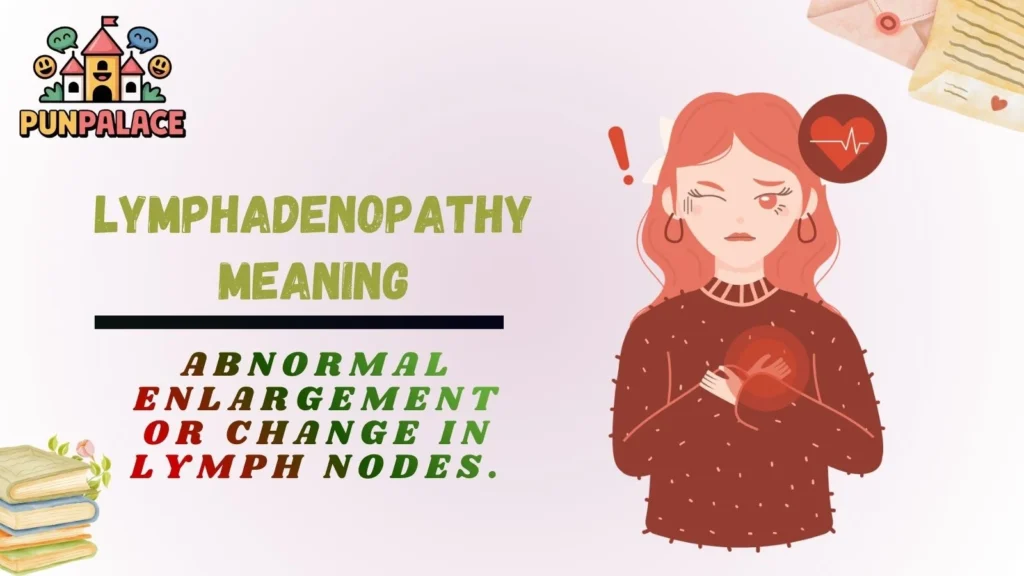
Lymphadenopathy is a medical term used to describe lymph nodes that are abnormal in size, consistency, or other characteristics. In everyday language, it is often used when lymph nodes become swollen or enlarged.
Lymph nodes are small structures that are part of the body’s lymphatic system. They help filter lymph fluid and play an important role in the immune system. Lymphadenopathy is a finding or description rather than a specific disease by itself.
The exact reason for lymphadenopathy can vary. It may occur with infections, inflammation, immune-related conditions, or, less commonly, certain cancers. The meaning therefore depends on factors such as the location of the lymph nodes, how long they have been enlarged, and other symptoms.
Simple definition: Lymphadenopathy means an abnormal enlargement or change in lymph nodes.
Lymphadenopathy Meaning at a Glance 📖
| Term | Simple Meaning | Common Context |
|---|---|---|
| Lymphadenopathy | Abnormal lymph nodes, often enlarged | Medical examinations |
| Lymph node | Small part of the lymphatic system | Immune system |
| Swollen lymph nodes | Enlarged or noticeable lymph nodes | Everyday language |
| Lymphadenitis | Inflammation of lymph nodes | Medical diagnosis |
What Are Lymph Nodes? 🧬

To understand the lymphadenopathy meaning, it helps to understand what lymph nodes do.
Lymph nodes are small, bean-shaped structures distributed throughout the body. They are part of the lymphatic system, which works closely with the immune system.
Lymph nodes help filter lymph fluid and contain immune cells that can respond to substances such as bacteria, viruses, and other foreign material.
They are found in areas including:
- Neck
- Armpits
- Chest
- Abdomen
- Groin
- Behind the ears
When lymph nodes respond to an infection or another process, they may become enlarged or otherwise abnormal. This is one situation in which the term lymphadenopathy may be used.
Is Lymphadenopathy the Same as Swollen Lymph Nodes? 🔍
They are closely related, but the terms are not perfectly identical.
Swollen lymph nodes is a common everyday phrase. Lymphadenopathy is the broader medical term for abnormal lymph nodes.
In many everyday situations, doctors may use lymphadenopathy when referring to enlarged lymph nodes. However, the medical term can encompass abnormalities beyond simple enlargement.
| Term | Meaning |
|---|---|
| Swollen lymph nodes | Common everyday description of enlarged nodes |
| Lymphadenopathy | Medical term for abnormal lymph nodes |
| Lymphadenitis | Inflammation of lymph nodes, often related to infection |
What Causes Lymphadenopathy? 🦠
Lymphadenopathy can have many possible causes. Infections are a common reason for lymph nodes to become enlarged because the immune system may become active while responding to an infection.
Possible causes include:
- Viral infections
- Bacterial infections
- Other infections
- Inflammatory conditions
- Immune-system disorders
- Medication reactions in some cases
- Certain cancers
The presence of lymphadenopathy alone does not identify the underlying cause. A healthcare professional may consider the person’s symptoms, medical history, examination findings, and other factors.
Lymphadenopathy Caused by Infection 🦠
When the immune system responds to an infection, nearby lymph nodes may become enlarged. This is sometimes called reactive lymphadenopathy.
For example, an infection affecting the throat may be associated with enlarged lymph nodes in the neck. Similarly, an infection affecting an area of the body may cause nearby lymph nodes to react.
Depending on the cause, enlarged lymph nodes may be tender or painful. They may also occur alongside other signs of infection.
However, not every enlarged lymph node is caused by an infection, which is why persistent or unusual changes should be assessed appropriately.
What Does Generalized Lymphadenopathy Mean? 📊
Generalized lymphadenopathy generally means that lymph nodes are enlarged or abnormal in multiple, noncontiguous areas of the body.
This differs from lymphadenopathy that is limited to one region.
| Type | Simple Explanation |
|---|---|
| Localized lymphadenopathy | Lymph nodes in one general region are affected |
| Generalized lymphadenopathy | Lymph nodes in multiple areas are affected |
The distinction can help healthcare professionals determine what possibilities should be considered, but it does not by itself provide a diagnosis.
What Does Cervical Lymphadenopathy Mean? 👤
Cervical lymphadenopathy refers to abnormal or enlarged lymph nodes in the neck region.
The neck contains many lymph nodes, so they can become noticeable during or after certain infections. For example, throat and upper-respiratory infections can be associated with enlarged cervical lymph nodes.
If you see the phrase “cervical lymphadenopathy” in a medical report, it simply identifies the location of the affected lymph nodes. It does not, by itself, explain why the nodes are enlarged.
What Does Lymphadenopathy Mean on a Medical Report? 📝
If you find lymphadenopathy written on a medical report, it generally means that the healthcare professional observed or identified lymph nodes that appear abnormal, often because they are enlarged.
It is important to understand that this term is usually a clinical finding rather than a final explanation of the cause.
A report might mention the location, size, appearance, or other characteristics of the lymph nodes. Healthcare professionals interpret these details together with the person’s symptoms and medical history.
For example:
“Mild cervical lymphadenopathy is present.”
This means that mildly abnormal or enlarged lymph nodes were identified in the neck area. It does not automatically mean that a serious condition is present.
Lymphadenopathy vs Lymphadenitis 🔄
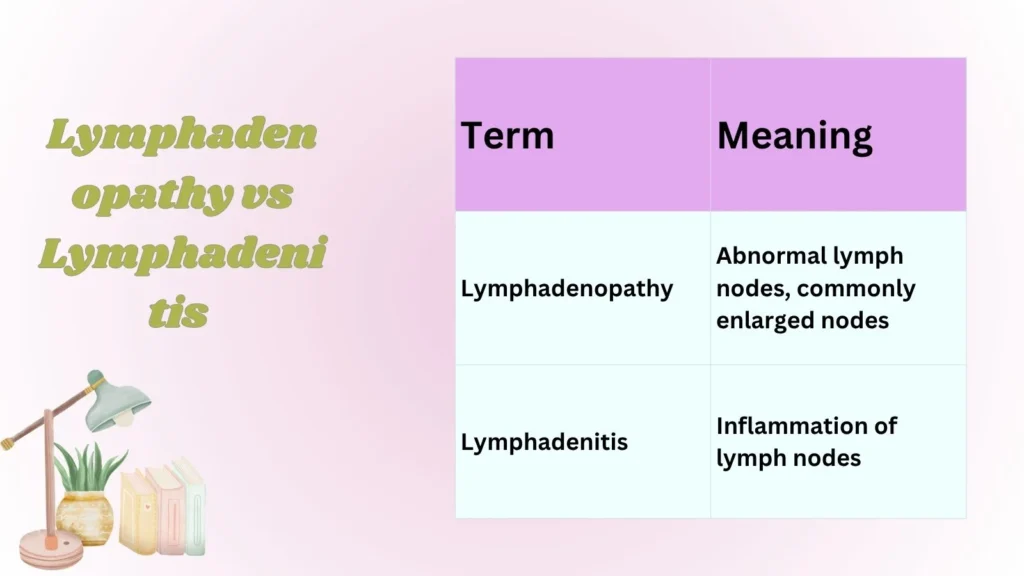
These two medical terms are related, but they describe different things.
| Term | Meaning |
|---|---|
| Lymphadenopathy | Abnormal lymph nodes, commonly enlarged nodes |
| Lymphadenitis | Inflammation of lymph nodes |
Lymphadenitis may occur when lymph nodes become inflamed, often in association with infection. Lymphadenopathy is a broader term and does not necessarily mean that the nodes are inflamed.
What Symptoms Can Occur With Lymphadenopathy? 🩺
Lymphadenopathy itself may be noticed as a lump or swelling under the skin, depending on where the affected lymph nodes are located.
Some people may experience:
- A noticeable lump or swelling
- Tenderness or pain in the area
- Symptoms related to an underlying infection
- Fever in some situations
- Sore throat or other localized symptoms when an infection is involved
Some enlarged lymph nodes may cause no noticeable symptoms at all and may only be identified during a physical examination or imaging test.
When Should Lymphadenopathy Be Checked? ⚠️
Many causes of enlarged lymph nodes are temporary and not serious. However, persistent, unexplained, rapidly changing, or otherwise concerning lymph-node enlargement should be evaluated by a healthcare professional.
Medical attention is particularly important when lymph-node changes occur alongside concerning symptoms or when the swelling does not improve as expected.
A healthcare professional can determine whether observation, testing, imaging, or another evaluation is appropriate.
This article explains the term, but it cannot determine the cause of lymphadenopathy in an individual person.
How Is Lymphadenopathy Evaluated? 🔎
The evaluation depends on the individual situation. A healthcare professional may begin by asking about symptoms and medical history and performing a physical examination.
Depending on the findings, additional evaluation may include:
- Blood tests
- Imaging studies
- Testing for specific infections
- Follow-up examinations
- Other tests when medically appropriate
The purpose of evaluation is to determine why the lymph nodes are abnormal rather than simply identifying that lymphadenopathy is present.
Examples of Lymphadenopathy in Sentences 💬
- “The doctor noted cervical lymphadenopathy.”
- “The patient developed lymphadenopathy during the infection.”
- “The scan showed lymphadenopathy in the affected region.”
- “The physician is evaluating the cause of the lymphadenopathy.”
In each example, the word describes an abnormality involving lymph nodes. The surrounding information is needed to understand the underlying cause.
Common Mistakes When Understanding Lymphadenopathy ❌

Assuming Lymphadenopathy Automatically Means Cancer
This is one of the most important misunderstandings to avoid. Lymphadenopathy does not automatically mean cancer. Enlarged or abnormal lymph nodes can occur for many reasons, including infections and inflammatory conditions.
Thinking Lymphadenopathy Is a Disease by Itself
Lymphadenopathy is generally a description or clinical finding. It does not necessarily identify the condition responsible for the lymph-node changes.
Confusing Lymphadenopathy With Lymphadenitis
These terms are related but not identical. Lymphadenitis specifically refers to inflammation of lymph nodes, while lymphadenopathy is a broader term for abnormal lymph nodes.
Assuming Every Enlarged Lymph Node Has the Same Cause
The cause can vary depending on the location, duration, associated symptoms, and other clinical findings. One person’s lymphadenopathy may have a completely different cause from another person’s.
Ignoring Persistent or Unexplained Swelling
Although many causes are temporary, persistent or unexplained lymph-node changes should not simply be self-diagnosed. A healthcare professional can determine whether further evaluation is needed.
FAQs:
What does lymphadenopathy mean in simple words?
Lymphadenopathy means that lymph nodes are abnormal, often because they are enlarged. It is a medical description rather than a diagnosis of one specific disease.
Is lymphadenopathy serious?
Lymphadenopathy can have many causes, and some are temporary or relatively minor. However, its significance depends on the person’s overall situation, so persistent or unexplained lymph-node changes should be evaluated by a healthcare professional.
What is the most common cause of lymphadenopathy?
Infections are a common cause of enlarged or reactive lymph nodes. However, there are many possible causes, so the underlying reason cannot be determined from the word lymphadenopathy alone.
What does cervical lymphadenopathy mean?
Cervical lymphadenopathy means abnormal or enlarged lymph nodes in the neck area. The term identifies the location but does not by itself reveal the cause.
What is the difference between lymphadenopathy and lymphadenitis?
Lymphadenopathy is a broader term for abnormal lymph nodes, while lymphadenitis specifically refers to inflammation of lymph nodes.
Final Thoughts:
The lymphadenopathy meaning is simple once you break down the medical terminology: it refers to abnormal lymph nodes, commonly enlarged lymph nodes.
Lymphadenopathy can happen for many reasons. Infections are common, but inflammation, immune-related conditions, medication reactions, and other conditions can also be involved. The term itself does not tell you the exact cause.
If you encounter “lymphadenopathy” in a medical report, focus on the complete report and the explanation provided by your healthcare professional rather than interpreting the word alone.

I am Henry James and i am a passionate writer and language enthusiast behind PunPalace, a platform dedicated to exploring meanings, word origins, and simple explanations. My aims to make learning vocabulary easy, engaging, and accessible for everyone.