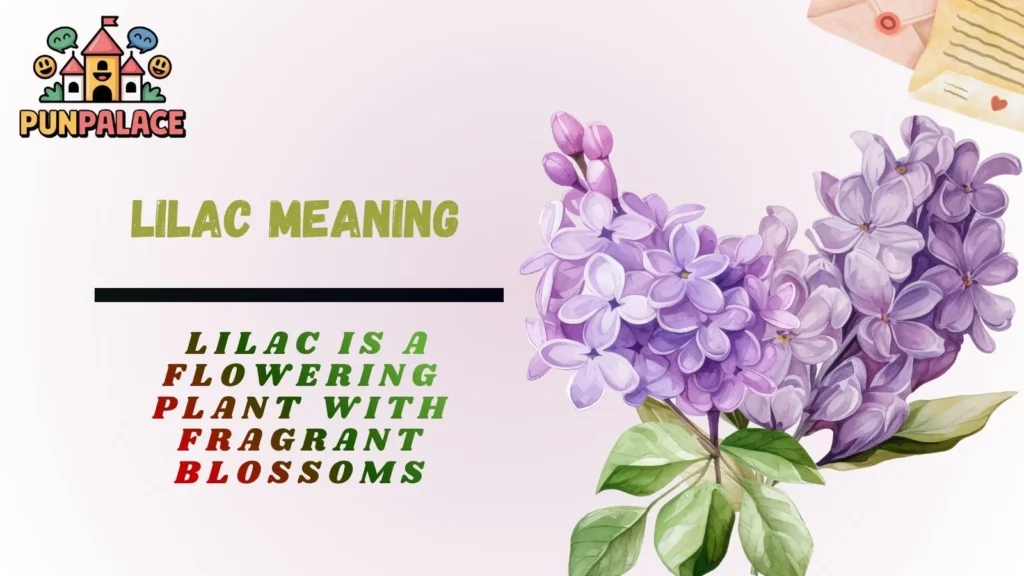
Lilac can refer to both a beautiful flowering plant and a soft purple color. As a flower, lilac is commonly associated with love, youth, renewal, innocence, and new beginnings. As a color, lilac describes a gentle, pale shade of purple with a soft and elegant appearance.
The exact lilac meaning can depend on the context. Someone discussing flowers may be talking about the plant and its symbolism, while someone describing clothing, paint, or design may be referring to the color.
Simple definition: Lilac is a flowering plant with fragrant blossoms and also the name of a soft, pale purple color.
Lilac Meaning at a Glance 📖
| Meaning | Simple Explanation |
|---|---|
| Lilac Flower | A fragrant flowering plant with clusters of blossoms |
| Lilac Color | A soft, light shade of purple |
| Symbolism | Often associated with youth, love, renewal, innocence, and spring |
| Emotional Association | Gentle, romantic, peaceful, and graceful |
| Common Contexts | Flowers, fashion, design, decoration, gifts, and symbolism |
What Is a Lilac Flower? 🌸
A lilac is a flowering plant known for its attractive clusters of small, fragrant flowers. Lilacs are especially associated with spring and are admired for their pleasant scent and beautiful appearance.
Lilac flowers are commonly found in shades of purple, lavender, pink, white, and other pale tones. Their strong fragrance makes them popular in gardens and ornamental planting.
The word “lilac” is therefore not only a color name. It originally refers to the flowering plant and its blossoms.
Lilac Flower Meaning 🌷
The lilac flower meaning is often connected with youth and new beginnings. Because lilacs bloom in spring, they can symbolize renewal and the fresh start associated with a new season.
Lilacs can also represent:
- Young love
- Innocence
- Renewal
- Spring
- Hope
- Fresh beginnings
- Romance
The symbolism can vary depending on the culture and the color of the flowers.
Lilac Color Meaning 💜
Lilac is a pale, soft purple color. It is generally lighter and more delicate than many deeper shades of purple.
Because it combines the calm appearance of a light color with the traditional associations of purple, lilac is often connected with elegance, gentleness, creativity, calmness, and romance.
For example, someone might describe a dress as lilac when it has a soft, light purple shade.
Example: “She wore a beautiful lilac dress to the wedding.”
Here, lilac refers to the color rather than the flower.
Lilac Meaning in Love and Romance ❤️
In flower symbolism, lilacs can have romantic associations, particularly with young love and the early stages of affection.
Their springtime blooming can also represent the feeling of something new beginning or developing.
A lilac bouquet can therefore carry a gentle romantic message, although the exact meaning depends on the occasion and the personal meaning attached to the flowers.
Because lilac has a soft appearance rather than an intense one, it can communicate a more delicate and graceful form of romance.
Lilac Meaning in Different Colors 🌈
Lilac flowers can appear in different colors, and flower symbolism sometimes assigns different meanings to different shades.
| Lilac Shade | Common Symbolic Association |
|---|---|
| Light Purple Lilac | Youth, innocence, and new love |
| Deep Purple Lilac | Love, admiration, and deeper emotion |
| White Lilac | Purity, innocence, and grace |
| Pink Lilac | Affection, tenderness, and warmth |
These meanings are traditional symbolic associations, not universal rules. Flower meanings can differ between cultures and individuals.
Lilac Meaning in Spring 🌱
Lilacs are strongly connected with spring because their fragrant flowers appear during this season in many growing regions.
For this reason, lilacs can symbolize a fresh beginning after winter. Their arrival can represent renewal, growth, beauty, and hope.
This seasonal connection is one reason lilacs are often used in gardens and springtime decorations.
Lilac Meaning in Personality and Aesthetics ✨
When people describe something as lilac, they may be trying to communicate a particular aesthetic or mood.
The color is often associated with qualities such as:
- Gentleness
- Elegance
- Creativity
- Calmness
- Romance
- Softness
These are cultural and aesthetic associations rather than scientific personality traits. A person’s favorite color does not determine their personality.
Lilac Meaning in Gifts 🎁
Lilacs can make a meaningful gift when the symbolism matches the occasion. Their associations with love, youth, renewal, and affection can make them suitable for celebrations and personal milestones.
For example, lilacs may be appreciated as a gift for someone celebrating:
- A new beginning
- A birthday
- An anniversary
- A friendship
- A spring celebration
- A meaningful personal milestone
The best meaning behind a floral gift often comes from the relationship between the giver and recipient.
Lilac Meaning in Fashion and Design 👗
In fashion and interior design, lilac is valued for its soft and elegant appearance. It can add a subtle touch of purple without appearing as intense as a darker violet shade.
Lilac is commonly used in:
- Clothing
- Wedding decorations
- Bedrooms
- Stationery
- Wall colors
- Graphic design
- Accessories
Its gentle appearance makes it especially popular in designs intended to feel calm, graceful, fresh, or romantic.
Lilac vs Lavender 🔄
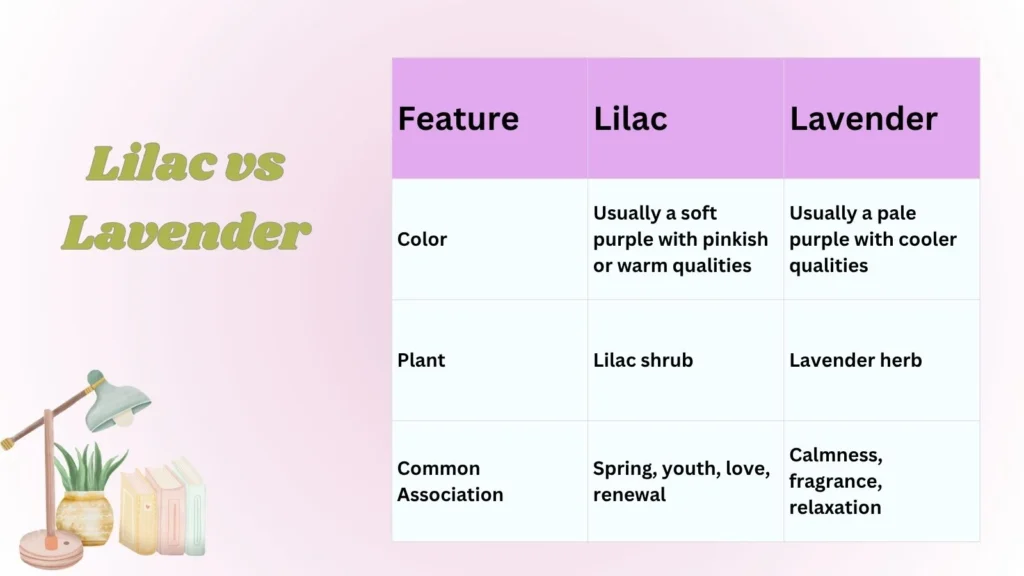
Lilac and lavender are often confused because both are light purple shades and both are also associated with fragrant plants.
| Feature | Lilac | Lavender |
|---|---|---|
| Color | Usually a soft purple with pinkish or warm qualities | Usually a pale purple with cooler qualities |
| Plant | Lilac shrub | Lavender herb |
| Common Association | Spring, youth, love, renewal | Calmness, fragrance, relaxation |
The exact appearance of both colors can vary, so there is no single universal shade that defines either one.
Lilac vs Purple 💜
Purple is a broad color category that includes many different shades. Lilac is one of the lighter and softer shades associated with purple.
For example, a deep royal purple can look bold and dramatic, while lilac usually appears lighter, softer, and more delicate.
Therefore, lilac is not completely separate from purple. It is generally understood as a particular pale purple shade.
How to Use Lilac in a Sentence ✍️
The word lilac can function as a noun when referring to the flower or plant and as an adjective when describing the color.
As a Flower or Plant
“The lilac smells wonderful in spring.”
Here, lilac refers to the flowering plant or its blossoms.
As a Color
“She chose lilac curtains for the room.”
Here, lilac describes the color of the curtains.
Common Phrases With Lilac 🌸
You may encounter the word lilac in several everyday contexts.
- Lilac flower
- Lilac tree
- Lilac color
- Lilac dress
- Lilac purple
- Lilac perfume
- Lilac garden
- Lilac bouquet
The meaning becomes clear from the surrounding sentence.
Origin of the Word Lilac 📚
The word lilac has a long linguistic history and entered English through French. Its history is ultimately connected with words used for the lilac plant in languages farther east, with the word’s journey involving several languages along the way.
The name of the flower eventually became associated with the plant’s characteristic pale purple color. This is why lilac can now refer to both the flower and a color.
Common Mistakes About Lilac Meaning ❌
Thinking Lilac Only Means a Color
Lilac can refer to both a flowering plant and a color. The context tells you which meaning is intended.
Assuming Lilac and Lavender Are the Same
Although both are associated with light purple colors and fragrant plants, lilac and lavender are different plants and color descriptions.
Believing Lilac Has One Universal Symbolic Meaning
Flower symbolism varies across cultures and traditions. Meanings such as youth, love, innocence, and renewal are common associations, but they are not universal rules.
Assuming Every Purple Flower Is Lilac
Not every purple flower is a lilac. Lilac refers specifically to plants in the lilac group, while many unrelated flowers can also have purple petals.
Confusing Lilac With Dark Purple
Lilac generally describes a light and soft purple shade. Darker shades are usually described with terms such as violet, plum, or deep purple.
FAQs:
What does lilac mean?
Lilac refers to a flowering plant and a soft, pale purple color. As a flower, it is often associated with youth, love, innocence, renewal, and spring.
What does a lilac flower symbolize?
Lilacs are commonly associated with young love, innocence, renewal, hope, and new beginnings. The symbolism can vary depending on cultural tradition and flower color.
What does the color lilac mean?
The color lilac is often associated with gentleness, elegance, calmness, creativity, and romance. These are common cultural and aesthetic associations.
Is lilac the same as lavender?
No. Lilac and lavender are different plants and are also used to describe somewhat different shades of light purple. Their exact colors can vary.
What color is lilac?
Lilac is generally a soft, pale shade of purple. Depending on the particular shade, it may have slightly pink, warm, or cool undertones.
Final Thoughts:
The lilac meaning is especially interesting because the word describes both a fragrant flowering plant and a beautiful pale purple color. As a flower, lilac is commonly linked with youth, love, innocence, renewal, and spring.
As a color, lilac is associated with a soft and graceful aesthetic. It is popular in fashion, decoration, flowers, and design because of its gentle appearance.
Whether you are researching the meaning of a lilac flower or simply wondering what the color represents, the word generally carries associations of beauty, freshness, tenderness, and new beginnings. 💜

I am Henry James and i am a passionate writer and language enthusiast behind PunPalace, a platform dedicated to exploring meanings, word origins, and simple explanations. My aims to make learning vocabulary easy, engaging, and accessible for everyone.