Duplicitous is an adjective used to describe someone who is deceitful, dishonest, or deliberately misleading. A duplicitous person may pretend to be honest or supportive while secretly having a different intention.
In simple terms, if someone acts one way in front of you but has a hidden or dishonest purpose, their behavior can be described as duplicitous.
The word often suggests more than an ordinary lie. It can imply that someone is deliberately presenting two different sides or behaving dishonestly to deceive others.
Simple definition: Duplicitous means deceitful or dishonest, especially when someone hides their true intentions or presents a false appearance.
Duplicitous Meaning at a Glance 📖
| Word | Simple Meaning | Example |
|---|---|---|
| Duplicitous | Deceitful or deliberately dishonest | His duplicitous behavior damaged their trust. |
| Duplicity | Deceitful or double-dealing behavior | Her duplicity became obvious later. |
| Deceitful | Trying to mislead someone | He was deceitful about the situation. |
| Two-faced | Friendly outwardly but dishonest or disloyal behind someone’s back | She thought her coworker was two-faced. |
What Does Duplicitous Mean in a Person? 👤

When duplicitous describes a person, it suggests that the person is behaving dishonestly or hiding their actual intentions.
For example:
“Everyone trusted him, but his duplicitous actions eventually came to light.”
This means that the person appeared trustworthy but was secretly acting in a deceptive way.
Calling someone duplicitous is generally a strong criticism of their character or behavior.
Duplicitous Meaning in Simple Words 💡
In everyday English, duplicitous means “not honest about your real intentions.”
Imagine someone tells you they completely support your idea. Later, you discover that they were secretly working against it while pretending to help. You could describe that behavior as duplicitous.
The word is often used when deception involves two different appearances or intentions.
- Dishonest
- Deceptive
- Misleading
- Two-faced
- Deceitful
- Double-dealing
Duplicitous Meaning in a Relationship ❤️
In a personal relationship, duplicitous behavior may involve pretending to be honest or loyal while secretly acting differently.
For example:
“She felt betrayed by his duplicitous behavior.”
The sentence suggests that his actions did not match the impression he gave her.
The word can apply to friendships, romantic relationships, family situations, or professional relationships whenever deliberate deception is involved.
Duplicitous Meaning in a Sentence ✍️
Here are several examples of how the word can be used:
- “The manager was accused of being duplicitous.”
- “His duplicitous behavior made it difficult to trust him.”
- “She discovered that the agreement had been handled in a duplicitous manner.”
- “The politician was criticized for making duplicitous promises.”
- “His duplicitous actions eventually damaged the friendship.”
In each example, the word communicates the idea of deliberate dishonesty or deception.
Duplicitous vs Duplicity 🔄
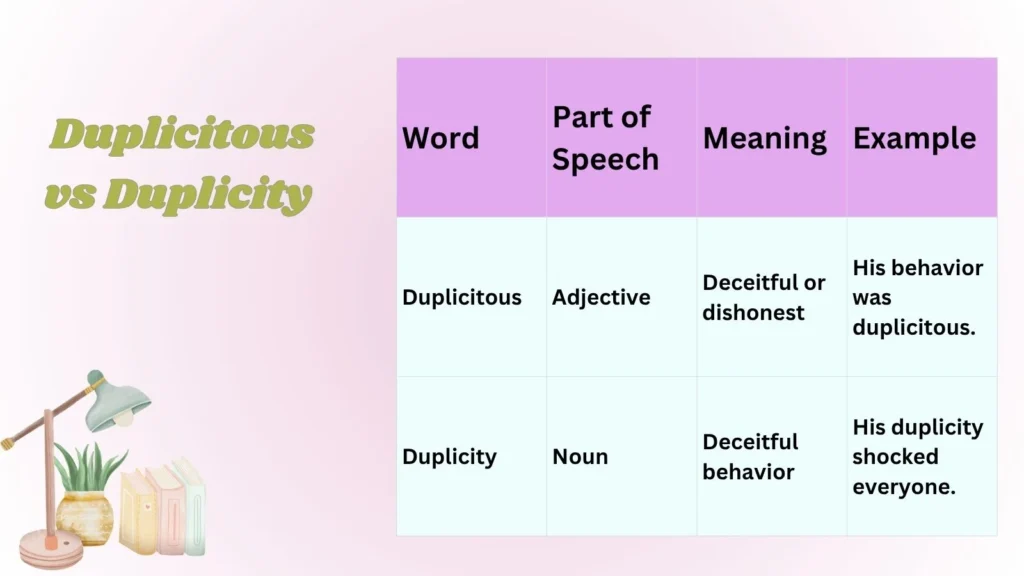
Duplicitous and duplicity come from the same word family, but they have different grammatical roles.
| Word | Part of Speech | Meaning | Example |
|---|---|---|---|
| Duplicitous | Adjective | Deceitful or dishonest | His behavior was duplicitous. |
| Duplicity | Noun | Deceitful behavior | His duplicity shocked everyone. |
A simple way to remember the difference is that duplicitous describes something, while duplicity names the deceptive behavior itself.
Duplicitous vs Deceptive 🧠
Deceptive is a broad word for something that misleads or creates a false impression. Duplicitous is more specific and often suggests deliberate dishonesty involving conflicting appearances, intentions, or behavior.
For example:
“The advertisement was deceptive.”
This means the advertisement gave a misleading impression.
“His behavior was duplicitous.”
This suggests that he deliberately acted dishonestly or presented himself differently from his actual intentions.
Duplicitous vs Two-Faced 👀
Two-faced is a more informal expression. It usually describes someone who behaves pleasantly toward a person while saying or doing something different behind that person’s back.
Duplicitous is more formal and can be used in professional, academic, or serious discussions.
| Expression | Tone | Meaning |
|---|---|---|
| Duplicitous | Formal | Deliberately deceptive or dishonest |
| Two-faced | Informal | Dishonest or disloyal behind someone’s back |
| Deceitful | Neutral to formal | Intentionally misleading |
Duplicitous Synonyms 🔤
Several words have similar meanings to duplicitous, although their exact shades of meaning can differ.
- Deceitful
- Dishonest
- Deceptive
- Misleading
- Two-faced
- Devious
- Untrustworthy
- Double-dealing
- Insincere
- Treacherous
The best synonym depends on what kind of dishonesty you want to describe.
Duplicitous Antonyms ↔️
The opposite of duplicitous is generally associated with honesty, openness, and sincerity.
- Honest
- Sincere
- Truthful
- Open
- Genuine
- Trustworthy
- Straightforward
- Frank
For example, someone who clearly communicates their intentions instead of hiding them could be described as straightforward rather than duplicitous.
Duplicitous Meaning in Different Contexts 🌎
In Business
In business, duplicitous can describe conduct that involves misleading clients, partners, employees, or competitors.
Example: “The company was criticized for its duplicitous dealings.”
In Politics
The word can describe someone who appears to make sincere commitments while secretly pursuing a conflicting goal.
Example: “Critics described the statement as duplicitous.”
In Friendships
It can describe someone who acts like a friend while secretly behaving against another person’s interests.
Example: “His duplicitous behavior ended the friendship.”
In Everyday Situations
The word can describe any situation involving deliberate deception or conflicting intentions.
Example: “I was disappointed by her duplicitous actions.”
Origin of the Word Duplicitous 📚
The word duplicitous is related to the idea of being double or having two sides. It ultimately traces back to Latin roots associated with “twofold.”
This connection helps explain why the word developed its modern association with double-dealing, deception, and hidden intentions.
The related noun duplicity carries the same central idea of deceptive or double-dealing behavior.
Why Is Duplicitous a Strong Word? ⚡
Calling someone duplicitous is stronger than simply saying that they made a mistake or were unclear.
The word generally suggests intentional deception. It implies that a person knowingly presented one appearance while having another intention or engaging in dishonest behavior.
Because of this, it is best used when the context supports the idea of deliberate dishonesty.
How to Use Duplicitous Correctly ✍️
Duplicitous normally functions as an adjective, so it should describe a noun.
Correct examples include:
- Duplicitous behavior
- Duplicitous conduct
- A duplicitous person
- A duplicitous statement
- Duplicitous actions
For example:
“The investigation revealed duplicitous conduct.”
This means the conduct was deliberately deceptive or dishonest.
Common Mistakes When Using Duplicitous ❌
Confusing Duplicitous With Duplicate
Duplicitous does not simply mean “duplicated” or “copied.” Although the words are historically related, their modern meanings are different.
Using Duplicitous to Mean Merely Confusing
Something confusing is not necessarily duplicitous. The word generally carries an element of deception or dishonesty.
Assuming Every Lie Is Duplicitous
A single lie may be dishonest, but duplicitous often suggests a broader pattern of deliberate deception or conflicting intentions.
Confusing Duplicitous With Duplicity
Duplicitous is an adjective, while duplicity is a noun. You can say “his duplicitous behavior” but “his duplicity was obvious.”
Using It in Casual Conversations Too Often
Duplicitous is a relatively formal word. In everyday conversation, words such as dishonest, deceptive, or two-faced may sound more natural.
FAQs:
What does duplicitous mean in simple words?
Duplicitous means deliberately dishonest or deceptive. It often describes someone who hides their real intentions or presents a false appearance.
Is duplicitous a negative word?
Yes. Duplicitous is generally negative because it describes deceptive, dishonest, or double-dealing behavior.
What is a synonym for duplicitous?
Common synonyms include deceitful, deceptive, dishonest, two-faced, devious, misleading, and double-dealing.
What is the difference between duplicitous and deceptive?
Deceptive is a broad term for something that misleads, while duplicitous often suggests deliberate dishonesty and conflicting intentions or appearances.
What is the noun form of duplicitous?
The related noun is duplicity, which means deceitful or double-dealing behavior.
Final Thoughts:
The duplicitous meaning is best understood as deliberately deceptive, dishonest, or double-dealing. It describes behavior in which someone hides their true intentions or presents a false appearance.
The word is stronger and more formal than simply saying someone is dishonest. It is useful when you want to emphasize deliberate deception and a difference between outward behavior and true intentions.
Remember the simple idea: duplicitous means appearing one way while secretly acting or intending something different.

I am Henry James and i am a passionate writer and language enthusiast behind PunPalace, a platform dedicated to exploring meanings, word origins, and simple explanations. My aims to make learning vocabulary easy, engaging, and accessible for everyone.